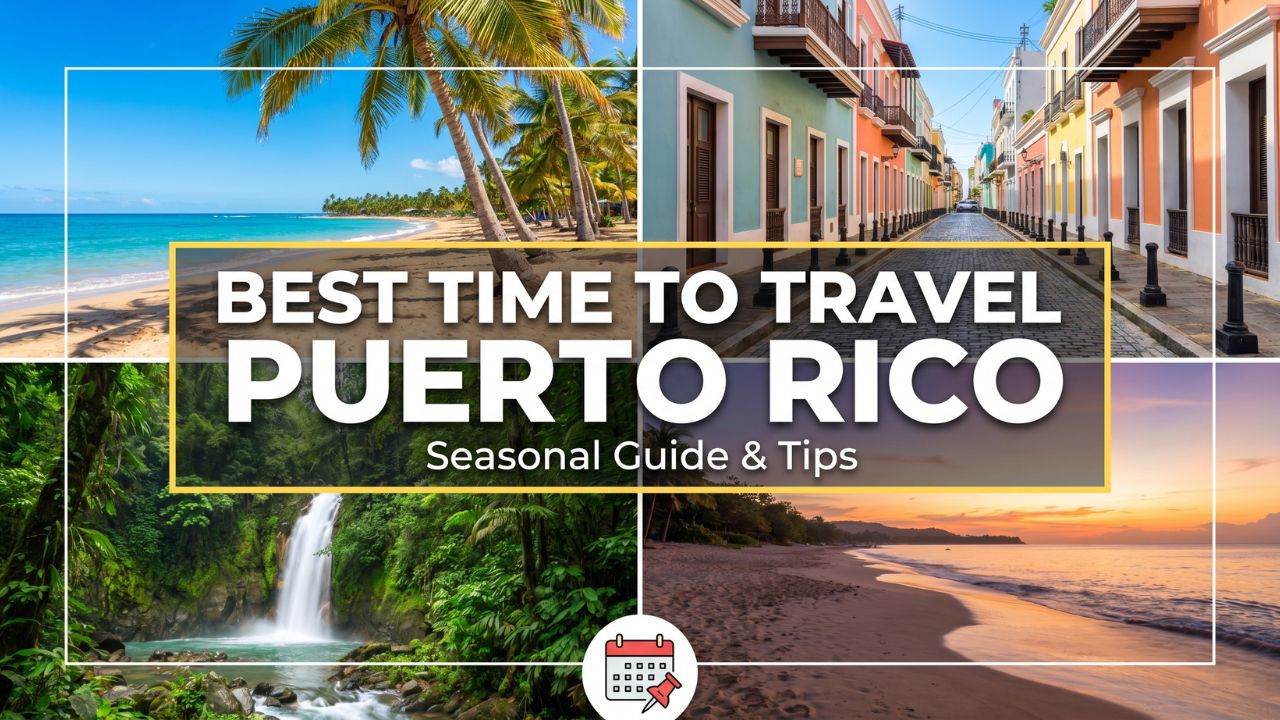
What Is the Cheapest Month to Fly to Puerto Rico – I used to book Puerto Rico flights the wrong way. I’d wait until I had a week off, check flights the weekend before, and somehow end up paying $450 round-trip from the East Coast when I knew people who’d flown for under $200. It took me three trips and a lot of wasted money before I cracked the code on what is the cheapest month to fly to Puerto Rico — and once I did, I never went back to guessing.
Puerto Rico is one of the most accessible Caribbean destinations for Americans. No passport required. No currency exchange. Direct flights from dozens of U.S. cities. And yet so many travelers overpay simply because they don’t understand how the island’s tourism seasons work. This guide is going to fix that.
Whether you’re flying from Chicago, New York, Miami, or anywhere else in the States, the information here will help you find the cheapest time to fly to Puerto Rico, avoid the rookie mistakes, and actually enjoy the island without blowing your budget on the flight alone.
 My Little Babog Family Lifestyle Travel Blog
 Budget Travel Tips for Expensive Cities USA
 Best Places to Visit in Colorado for First Time Visitors (2026 Guide)
 Cheapest Month to Fly to New York
 15 Best Place & Best Time to Travel to Puerto Rico
 Best Italian Places to Travel: The Only Guide You’ll Need Before Booking Your Flight
What Is the Cheapest Month to Fly to Puerto Rico
| Detail | Info |
|---|---|
| Status | U.S. Territory |
| Main Airport | Luis Muñoz Marín International Airport (SJU), San Juan |
| Language | Spanish and English |
| Currency | U.S. Dollar (USD) |
| Time Zone | Atlantic Standard Time (AST) — no daylight saving |
| Visa Requirements | None for U.S. citizens (it’s domestic travel) |
| Best Duration of Stay | 5–10 days |
| Average Flight Time from NYC | ~3.5 hours |
| Average Flight Time from Chicago | ~4.5 hours |
Why Puerto Rico Pricing Confused Me Until I Understood the Seasons
Puerto Rico doesn’t have a single “expensive season.” It has three pricing tiers, and they shift based on a combination of weather, American school calendars, and hurricane risk perception — not just temperature.
Most travelers assume summer is cheap because it’s hot and humid. In Puerto Rico, that logic partially holds, but only if you’re flexible about which summer weeks you fly. The island’s high season runs from mid-December through mid-April, driven entirely by Americans and Canadians escaping winter. Flights spike, hotels spike, and Old San Juan gets crowded with cruise ship passengers.
Once mid-April hits and spring break crowds thin out, prices start to drop. By May, you’re in legitimately affordable territory. Then summer hits, and two things happen simultaneously: families on school break push prices back up in July and early August, while hurricane season quietly begins in June and keeps a cap on how high fares climb.
Understanding this tug-of-war between demand and weather anxiety is the key to finding the cheapest time of year to fly to Puerto Rico.
What Is the Cheapest Month to Fly to Puerto Rico: The Full Seasonal Breakdown
| Month / Season | Weather | Crowd Level | Best For |
|---|---|---|---|
| January | 75–80°F, low humidity | Very High | Beach vacations, festivals |
| February | 75–80°F, pleasant | Very High | Honeymoons, couples travel |
| March | 78–82°F, spring break surge | Extremely High | Avoid unless you love crowds |
| April | 80–84°F, warming up | Moderate (late April drops) | Good value if you fly after the 15th |
| May | 82–86°F, some humidity | Low | Best value month overall |
| June | 85–88°F, hurricane season starts | Low-Moderate | Good deals, early hurricane risk low |
| July | 87–90°F, humid | Moderate-High | Families, good beach weather |
| August | 87–90°F, peak hurricane risk | Moderate | Riskiest travel month |
| September | 86–88°F, high hurricane risk | Low | Cheapest fares, but real weather risk |
| October | 84–87°F, hurricane season easing | Low-Moderate | Good budget deals return |
| November | 80–84°F, pleasant | Low-Moderate | Underrated sweet spot |
| December | 78–82°F, holiday surge mid-month | Low early, Very High after Dec 15 | Book early December for deals |
The cheapest months to fly to Puerto Rico are September, October, May, and early June — in roughly that order of affordability.
But September comes with a genuine caveat: this is peak hurricane season, and while most trips go perfectly fine, the risk is real. If you’re on a tight budget and flexible with dates, September can deliver the absolute lowest fares. If you want cheap flights without weather anxiety, May and October are your best bets.
The Actual Cheapest Time to Fly to Puerto Rico (Month by Month Breakdown)
September and Early October: Lowest Fares, Real Risk
September is consistently the cheapest month to go to Puerto Rico by a wide margin. Round-trip flights from New York can drop below $150. From Chicago, I’ve seen fares as low as $180 round-trip during this window.
The reason is simple: hurricane season. The Atlantic hurricane season officially runs June 1 through November 30, but the statistical peak is mid-August through mid-October. Demand drops because travelers are nervous, and airlines respond by cutting prices aggressively.
Here’s my honest take: most September trips to Puerto Rico are completely fine. The island doesn’t get hit by a major hurricane every year. But the risk exists, and if a storm does develop, you may face cancellations, rerouting, and a ruined vacation. Always buy travel insurance in September — this is non-negotiable.
My Little Babog Family Lifestyle Travel Blog
Budget Travel Tips for Expensive Cities USA
Best Places to Visit in Colorado for First Time Visitors (2026 Guide)
Cheapest Month to Fly to New York
15 Best Place & Best Time to Travel to Puerto Rico
Best Italian Places to Travel: The Only Guide You’ll Need Before Booking Your Flight
By early October, hurricane risk drops noticeably and prices are still favorable. This is where I personally like to book if I’m going for maximum budget savings with reduced weather anxiety.
May: Best Value Month Without the Risk
If I had to name the single best time to fly to Puerto Rico for value without weather risk, I’d say May without hesitation.
Spring break is over. School’s still in session. The island hasn’t fully heated up to summer humidity yet. Temperatures are warm and pleasant — usually in the low-to-mid 80s — and you’ll find hotel prices, flight prices, and restaurant waits all sitting at their lowest non-hurricane-season levels.
Round-trip fares from the East Coast regularly come in around $200–$280 in May. From the Midwest, expect $230–$320. These aren’t September prices, but you’re also not rolling the dice on a tropical storm.
November: The Underrated Sweet Spot
November doesn’t get enough credit. Hurricane season technically extends through the end of November, but statistically, the risk drops sharply after mid-October. By the first two weeks of November, you’re looking at:
- Post-hurricane-season calm
- Pre-holiday-rush pricing
- Comfortable weather in the low 80s
- Thin crowds at beaches and popular attractions
Flights in November often come in comparable to October prices — frequently $200–$300 from most U.S. cities. The island starts to feel like itself again after the relative quiet of September, and you’ll share the beaches mostly with other budget-savvy travelers who did their homework.
What to Avoid: March and the Holiday Weeks
March is the most expensive time to fly to San Juan. Spring break pushes prices to their annual peak, and combining that with the tail end of the winter high season means you’re competing with everyone. Expect round-trip fares from $400–$600+ from most major U.S. cities.
Christmas week (December 22 through January 2) and Thanksgiving week are similarly brutal on the wallet. Puerto Ricans celebrate the holiday season more intensely than almost anywhere else in the world — there are festivals, parades, and parrandas (Puerto Rican caroling parties) happening constantly. The island is genuinely magical during this period. But you’ll pay for it.
When Is the Cheapest Time to Fly to Puerto Rico From Chicago Specifically?
Flying from Chicago to Puerto Rico is slightly different from flying from the East Coast, and it’s worth addressing specifically since when is the cheapest time to fly to Puerto Rico from Chicago is one of the most common questions I see.
Chicago is served primarily by O’Hare (ORD) and Midway (MDW) for Puerto Rico flights. The good news is that both American Airlines and United frequently offer direct or one-stop service to San Juan, and the competitive routes keep prices reasonable.
The cheapest months from Chicago follow the same general pattern — September, October, May, and November — but Chicago fares tend to run $30–$60 higher on average than East Coast departures because of the distance.
A few specific tips for Chicago flyers:
- Check both ORD and MDW, as budget carriers sometimes favor Midway
- Tuesday and Wednesday departures from Chicago tend to run cheaper than Friday-Sunday
- Booking 6–8 weeks out in the shoulder season often yields the best prices
- Setting fare alerts on Google Flights for the SJU route will catch flash sales before they disappear
Have you flown to Puerto Rico from Chicago and found a particularly good deal? I’d love to hear your approach in the comments.
How Far in Advance Should You Book, and What Day Are Flights Cheapest?
This is where a lot of travelers leave money on the table. Timing your purchase is almost as important as picking the right month.
For travel in the shoulder season (May, October, November): Book 4–8 weeks out. This is the sweet spot where airlines have released inventory but haven’t sold out of the cheaper fare classes.
For travel in the high season (December–March): Book 3–5 months in advance. High-season flights to Puerto Rico sell out early, and the cheapest seats go first. If you’re planning a Christmas trip, start looking in September.
For travel in hurricane season (September–October): You can actually wait and book 2–3 weeks out in some cases. Because demand is suppressed by weather anxiety, airlines often hold inventory longer and discount aggressively close to departure. That said, this is a gamble — if you find a great fare 6 weeks out, take it.
What day do flight prices drop? Historically, Tuesday afternoons and Wednesdays have shown slightly lower average fares, but this gap has narrowed significantly as airlines have gotten more sophisticated with pricing algorithms. A better strategy: set Google Flights price alerts and book when the price drops to your target, regardless of the day.
Pro Tips, Common Tourist Mistakes, and What I Wish I Knew Before Going to Puerto Rico
This section is where I’m going to give you the stuff that guidebooks consistently leave out.
Don’t assume Old San Juan is your only base. Yes, the colorful colonial streets and ocean views of Old San Juan are stunning. But if your goal is beaches and budget, consider basing yourself in Isla Verde or Condado. These neighborhoods have a denser concentration of affordable eats and easier beach access.
Rent a car — seriously. This is the single biggest mistake I see first-timers make. Puerto Rico’s public transportation is limited outside of San Juan. If you want to reach El Yunque National Rainforest, Culebra, Rincón’s surf beaches, or the bioluminescent bays in Fajardo or La Parguera, you need wheels. Rental cars are affordable here, especially if you book through a local company rather than the major chains at the airport.
Be careful with Rule 22. Puerto Rico has a law — commonly called Rule 22 — that offers significant tax incentives to individuals and businesses that relocate to the island. This is relevant if you’re considering a longer stay or exploring the idea of living in Puerto Rico part-time. It’s not something that affects a standard vacation, but if you’ve heard the term and wondered what it means, that’s the short version.
The food scene is genuinely incredible, and you don’t need to spend much. Mofongo, lechón, alcapurrias, bacalaítos — Puerto Rico’s local cuisine is rich, filling, and affordable when you eat where locals eat. The fondas (casual local restaurants) in Santurce and along Calle Loíza serve some of the best food on the island for under $15 a plate.
Book your bioluminescent bay tour early. The Mosquito Bay on Vieques is consistently ranked among the world’s top bioluminescent bays. Tours book up weeks in advance during any busy period. Don’t wait until you land to figure this out.
What is the main predator in Puerto Rico? Tourists ask this more than you’d expect. The honest answer is that Puerto Rico has no large land predators. The island’s fauna is relatively benign. The main wildlife concerns are mosquitoes (use repellent, especially near standing water), jellyfish near some beaches in certain seasons, and the occasional sea urchin hiding under rocks if you’re wading in rocky areas. The coquí frogs that chirp at night are not a threat — they’re the island’s beloved unofficial mascot.
Where to Stay, Eat, and Get Around: The Practical Breakdown
Where to Stay
Old San Juan is the most atmospheric neighborhood, with cobblestone streets, colorful buildings, and the massive Castillo San Felipe del Morro dominating the coastline. Boutique hotels here tend to run $180–$350/night depending on the season. For travelers on a budget, look at guesthouses and smaller inns slightly outside the most tourist-heavy blocks.
Isla Verde is where the larger resort hotels cluster, and it’s closest to Luis Muñoz Marín International Airport (SJU). If you’re arriving late or departing early, staying here saves on transit time. Mid-range hotels run $120–$220/night.
Condado sits between Isla Verde and Old San Juan and offers a good middle ground — urban, walkable, with a nice beach strip and a solid restaurant scene along Ashford Avenue.
Outside San Juan: If you’re heading to the west coast, Rincón has vacation rentals and surf hostels. For Vieques or Culebra, staying on the islands themselves rather than taking day trips gives you access to the beaches in the early mornings before day-trippers arrive.
Where to Eat Without Blowing Your Budget
- La Alcapurria Quemá in La Placita, Santurce: legendary street food spot
- El Jibarito in Old San Juan: classic Puerto Rican home cooking, always busy for a reason
- Lote 23 food truck park in Santurce: a mix of local and creative vendors, great for groups with different tastes
- Lechoneras on Route 184 near Cayey: if you want the best roasted pork on the island, this stretch of highway is where you go on a Sunday
Getting Around
Uber works in San Juan and is generally reliable and affordable. But once you leave the metro area, you need that rental car. Buses (the AMA system) serve San Juan neighborhoods but aren’t practical for reaching island highlights.
For Vieques and Culebra, take the ferry from Ceiba (about an hour from San Juan) rather than the small charter planes — it’s significantly cheaper, just book in advance because it fills up.
Budget Breakdown: What to Actually Expect to Spend
Puerto Rico is not the cheapest Caribbean destination, but it’s far more affordable than people assume — especially because there’s no currency conversion and no international roaming fees for most U.S. phone plans.
| Expense | Budget Traveler | Mid-Range | Splurge |
|---|---|---|---|
| Round-trip flight (from East Coast) | $150–$220 (shoulder/off-season) | $280–$380 | $450+ (peak season) |
| Round-trip flight (from Chicago) | $200–$280 | $320–$420 | $500+ |
| Accommodation per night | $70–$110 (guesthouses) | $150–$250 | $300–$600+ |
| Meals per day | $25–$45 (local spots) | $60–$100 | $120+ |
| Rental car per day | $35–$55 (local company) | $60–$85 (major chain) | $100+ (SUV/luxury) |
| Activities/day | $20–$40 | $60–$100 | $150+ |
| Daily total (excl. flights) | $130–$200 | $270–$440 | $550+ |
A realistic 7-night budget trip to Puerto Rico, flying in the shoulder season, staying in guesthouses, eating at local spots, and renting a car, comes in around $1,200–$1,600 all-in per person from the East Coast. That’s genuinely competitive with many domestic U.S. vacation destinations.
How to Plan Your Puerto Rico Itinerary: A 7-Day Sample Schedule
This itinerary assumes you’re flying into San Juan and want to see a solid mix of the island’s highlights without exhausting yourself.
Day 1 — Arrive in San Juan, Settle Into Isla Verde or Condado Get oriented, walk the beach at sunset, grab dinner at a local restaurant in Condado. Recover from travel.
Day 2 — Old San Juan Full Day Walk Calle del Cristo, visit Castillo San Felipe del Morro (El Morro) and Castillo San Cristóbal. Both are U.S. National Parks — entry is free with your America the Beautiful pass or $10 at the gate. Have lunch at a fonda in La Perla area. Explore the colorful streets in the late afternoon when light is best for photos.
Day 3 — El Yunque National Rainforest Puerto Rico is home to the only tropical rainforest in the U.S. National Forest system. It’s about 45 minutes from San Juan — you’ll want that rental car. Get there by 8 a.m. before the afternoon clouds and crowds build up. Hike the La Mina trail and cool off in the natural pool at the bottom.
Day 4 — Bioluminescent Bay, Fajardo Book an evening kayak tour of the Laguna Grande bioluminescent bay in Fajardo. The kayaking itself is about 45 minutes each way through mangrove channels. When the paddles hit the water in the bay, you’ll see glowing blue-green light around every stroke. It’s as surreal as it sounds.
Day 5 — Drive West, Stay in Rincón Head to the west coast. Stop at Crash Boat Beach in Aguadilla — one of Puerto Rico’s most underrated beaches — before arriving in Rincón. Rincón is known as a surfing destination, but even non-surfers love the laid-back vibe and spectacular sunsets at Steps Beach.
Day 6 — Rincón Beaches and Local Life Spend a full day in Rincón. Take a surf lesson if the conditions are good (November through April is the best surf season). Eat at a beachside shack. Watch the sunset over the water — Puerto Rico is on Atlantic Standard Time year-round and does not observe daylight saving, so sunsets here in winter come noticeably later than on the mainland.
Day 7 — Drive Back, Last Hours in San Juan Drive back to San Juan, stopping at a lechonera on Route 184 if you can. Spend your last evening in Santurce — the city’s arts and nightlife district — hitting Plaza del Mercado and the bars around La Placita.
What Is the Cheapest Month to Fly to Puerto Rico FAQ
Q : Which month is hurricane season in Puerto Rico?
Ans – Hurricane season officially runs June 1 through November 30. The peak of the season — when storm activity is statistically highest — is mid-August through mid-October. September is the single highest-risk month. That said, most years pass without a direct hit to Puerto Rico, and many travelers visit during this period without any weather disruption.
Q : How far in advance should I book flights to Puerto Rico?
Ans – For travel in the high season (December through March), book 3–5 months out. For shoulder season travel in May, October, or November, 4–8 weeks tends to yield the best prices. For September travel, you can sometimes find good deals 2–3 weeks out due to suppressed demand, but if you spot a solid fare earlier, take it.
Q : What I wish I knew before going to Puerto Rico?
Ans – Rent a car — public transit won’t get you to the best spots. Book your bioluminescent bay tour before you arrive. Eat at fondas and local spots rather than tourist-facing restaurants to save money and eat better. The island runs on Atlantic Standard Time year-round (no daylight saving), so factor that into your planning if you’re coming in winter.
Q : What months not to go to Puerto Rico?
Ans – August and September carry the highest hurricane risk and are best avoided unless you’re very comfortable with travel insurance and potential disruptions. March is peak spring break season and the most expensive time to visit. The Christmas-New Year’s holiday window is also extremely crowded and expensive.
Q : What day do flight prices drop?
Ans – Historically, Tuesday and Wednesday fares have trended slightly lower, but the gap has narrowed. A more reliable strategy is to set price alerts on Google Flights for your route and book when the price hits your target number, regardless of the specific day.
Q : What is Rule 22 in Puerto Rico?
Ans – Act 22 (commonly called Rule 22) is a Puerto Rican law — now consolidated under Act 60 — that offers tax incentives including a 0% tax rate on certain capital gains to individuals who become bona fide residents of Puerto Rico. It’s designed to attract wealthy investors to the island and is distinct from vacation travel. It only applies if you actually establish residency.
Q : What is the coldest month in Puerto Rico?
Ans – January and February are the coolest months, with average temperatures around 75–80°F. By any mainland U.S. standard, this is still warm beach weather. Puerto Rico does not experience cold winters — it is subtropical, and temperatures rarely drop below 70°F even at night in the coldest months.
Q : What is the main predator in Puerto Rico?
Ans – Puerto Rico has no large land predators. The island’s ecosystem is relatively safe for visitors. Wildlife concerns are limited to mosquitoes (use insect repellent, especially near the rainforest and mangroves), jellyfish in certain areas during specific seasons, and sea urchins in rocky coastal areas. The coquí frog — the tiny tree frog whose “ko-KEE” call fills the night air — is not dangerous and is beloved across the island.
Reference Links
For the most current U.S. government travel guidance and any health advisories relevant to Puerto Rico, check the official U.S. Department of State travel page: https://travel.state.gov