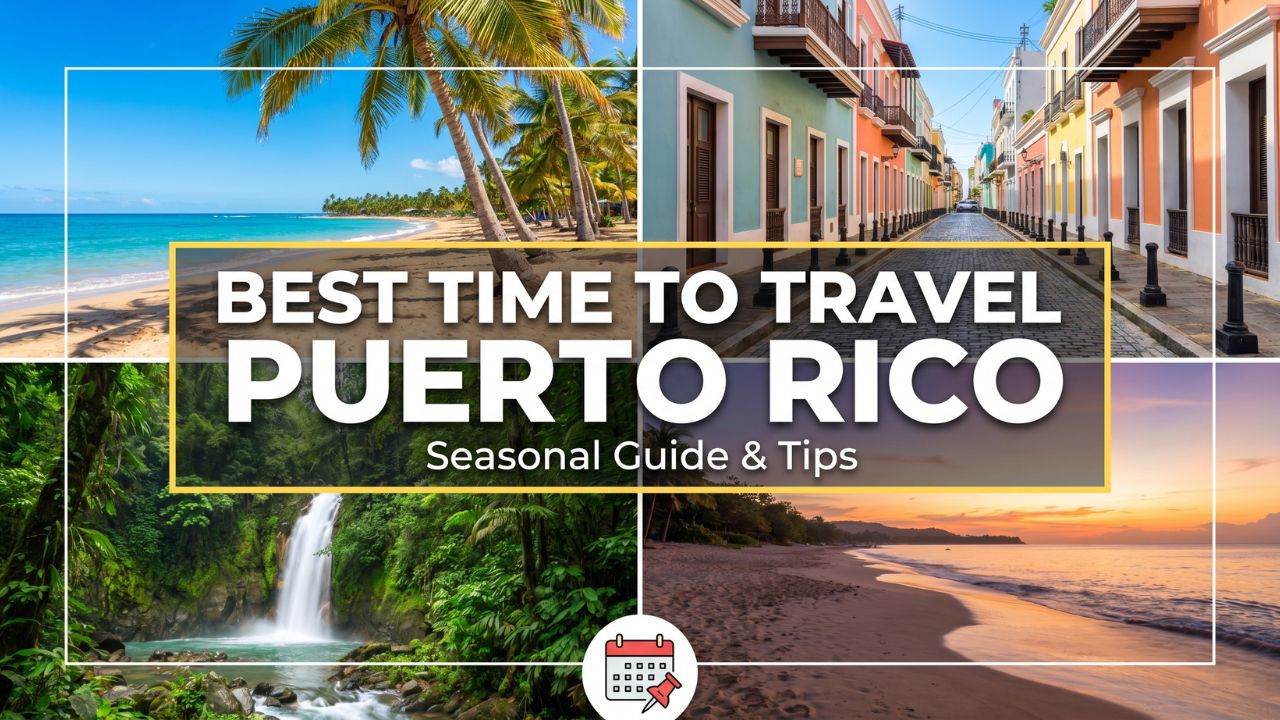
Best Time to Travel to Puerto Rico – Puerto Rico has been on my radar for years, and when I finally stepped off that plane at Luis Muñoz Marín International Airport in San Juan, I understood immediately why so many Americans keep coming back. The air is warm and thick with salt, the old city walls glow gold in the afternoon light, and the food — don’t even get me started on the food. But here’s the honest truth no travel article tells you upfront: the best time to travel to Puerto Rico is not the same for every traveler. It depends entirely on what kind of trip you want.
If you’re chasing deals, you’ll want different dates than the honeymooners. If you’re a surfer, your perfect window is a different season than a family with kids. This guide is going to break all of that down for you — real costs, real weather, real crowd levels — so you can plan your Puerto Rico trip with confidence and actually enjoy every single day you’re there.
Best Time to Travel to Puerto Rico
| Detail | Info |
|---|---|
| Status | U.S. Territory |
| Capital | San Juan |
| Language | Spanish and English |
| Currency | U.S. Dollar (USD) |
| Time Zone | Atlantic Standard Time (AST) — No daylight saving time |
| Visa Requirements | No passport or visa needed for U.S. citizens |
| Best Duration of Stay | 5–10 days |
| Closest Major U.S. Airport Hub | Miami (MIA), New York (JFK), Atlanta (ATL) |
Why Puerto Rico Stopped Me In My Tracks
I’ve traveled to dozens of Caribbean destinations, and most of them feel like slight variations on the same theme — pretty beach, resort food, poolside drinks. Puerto Rico is something completely different, and I say that as someone who genuinely tried to manage expectations before arriving.
 My Little Babog Family Lifestyle Travel Blog
 Budget Travel Tips for Expensive Cities USA
 Best Places to Visit in Colorado for First Time Visitors (2026 Guide)
 Cheapest Month to Fly to New York
 What Is the Cheapest Month to Fly to Puerto Rico
 Best Italian Places to Travel: The Only Guide You’ll Need Before Booking Your Flight
Old San Juan hit me like a wall of color. Centuries-old Spanish colonial buildings painted in turquoise, yellow, and terracotta lined narrow cobblestone streets. El Morro, the 16th-century fortress jutting out into the Atlantic, felt like something out of a historical film rather than a Tuesday afternoon walk. And yet — your phone still works perfectly, you can use your American credit card everywhere, and nobody needs a translator.
That’s the secret most travelers don’t talk about enough: Puerto Rico gives you an international travel experience without any of the friction that usually comes with it. No currency exchange, no passport headaches, no roaming charges. It’s a foreign world wrapped in familiar comfort.
Then there’s the food. A single afternoon in La Placita de Santurce taught me that mofongo — mashed plantains stuffed with garlic and pork or seafood — is one of the genuinely great foods of the world. Paired with cold Medalla beer, sitting outside as salsa music floated from three directions at once, I remember thinking: why did I wait so long?
Have you already been to Puerto Rico before? What was the moment that made you fall in love with it? Drop it in the comments — I’d love to hear your story.

Best Time to Travel Puerto Rico: Month-by-Month Breakdown
This is the question that brings most people to this article, so let’s get into it properly. Puerto Rico sits in the northeastern Caribbean and enjoys a tropical climate year-round, which means warm temperatures in basically every month. But there are real differences between seasons that will absolutely affect your trip.
Puerto Rico Seasonal Travel Table
| Month / Season | Weather | Crowd Level | Best For |
|---|---|---|---|
| January | Warm, 75–82°F, low humidity | High (peak season) | Families, beach vacations, escaping U.S. winter |
| February | Warm, 76–83°F, occasional showers | High (peak season) | Couples, whale watching, diving |
| March | Warm, 77–84°F, Spring Break influx | Very High | Beach lovers, outdoor adventures |
| April | Hot, 78–85°F, mild rain increases | Moderate–High | Eco-tourism, festivals, shoulder season value |
| May | Hot, 79–86°F, rainy season begins | Moderate | Budget travelers, surfers (north coast) |
| June | Hot and humid, 80–87°F, frequent rain | Low–Moderate | Budget travel, rainforest visits |
| July | Hot, 81–88°F, afternoon storms | Moderate | Bioluminescent bay tours, summer families |
| August | Hottest month, 82–89°F, hurricane risk begins | Low | Deep-deal seekers only |
| September | Hot, peak hurricane risk, 81–88°F | Very Low | Avoid unless flexible with plans |
| October | Warm, 79–86°F, hurricane risk fading | Low | Adventurous budget travelers |
| November | Pleasant, 77–84°F, transitioning | Low–Moderate | Surfers, value seekers, uncrowded beaches |
| December | Pleasant, 75–83°F, holiday rush builds | High by late month | Festive travelers, holiday escape crowd |
The Sweet Spot Most Americans Miss
The shoulder seasons — April and November — are genuinely the best times to travel to Puerto Rico if you want a balance of good weather, reasonable prices, and crowds that don’t make you feel like you’re fighting for sand space.
April comes with warm temperatures, most beaches still calm, and flight prices that haven’t hit their January-February peak. The rainy season hasn’t fully kicked in yet, so most days are sunny with maybe a brief afternoon shower.
November is equally underrated. The hurricane season has essentially passed, the island starts cooling down to extremely comfortable temperatures, surfers start showing up on the northwest coast for the winter swells, and hotels slash their rates before the December holiday crowd rolls in.
Hurricane Season in Puerto Rico: What You Actually Need to Know
Let’s address this head-on because it’s the thing Americans most often get wrong when planning Puerto Rico trips.
My Little Babog Family Lifestyle Travel Blog
Budget Travel Tips for Expensive Cities USA
Best Places to Visit in Colorado for First Time Visitors (2026 Guide)
Cheapest Month to Fly to New York
What Is the Cheapest Month to Fly to Puerto Rico
Best Italian Places to Travel: The Only Guide You’ll Need Before Booking Your Flight
Hurricane season in Puerto Rico officially runs from June 1 through November 30. The peak risk window is August through mid-October, with September historically being the single most dangerous month. Hurricane Maria in 2017 was a sobering reminder of how serious these storms can be.
That said, most years pass without a direct hit. The probability of a major hurricane striking Puerto Rico in any given year is relatively low — but “relatively low” is not the same as “impossible,” and that distinction matters when you’re booking a non-refundable vacation package.
My honest advice: if you’re visiting during hurricane season, always buy travel insurance and book with flexible cancellation policies. Flying into San Juan between August and October without a safety net is a financial gamble you don’t need to take.
The U.S. State Department’s travel advisory page at travel.state.gov is always worth checking before any Caribbean trip for up-to-date safety and weather alerts.
Cheapest Time of Year to Go to Puerto Rico
If your main goal is stretching your budget as far as possible, the answer is clear: travel between mid-August and mid-October. This is the heart of hurricane season and the absolute lowest demand period on the island. You can find round-trip flights from the East Coast for as little as $150–$200, and hotel rooms in San Juan that normally run $200/night drop to $80–$120.
The trade-off is real: higher humidity, more frequent rain, and genuine storm risk. But plenty of experienced Puerto Rico travelers specifically plan these trips during this window, book refundable hotels, monitor the weather obsessively, and end up having amazing trips at half the cost.
The next-cheapest window is May through early June, right as the rainy season begins but before the really heavy summer humidity sets in. You get some genuinely good beach days, much lower prices than peak season, and far fewer tourists at popular spots.
Top Places to Visit in Puerto Rico: 15 Spots Worth Your Time
Puerto Rico rewards travelers who explore beyond San Juan, though the capital itself deserves at least two or three days. Here’s where to go and why.
1. Old San Juan (Viejo San Juan), San Juan
Old San Juan is the historic heart of the island and one of the most visually striking neighborhoods in the entire Caribbean. The blue cobblestone streets (actually made from melted iron slag brought over as ship ballast from Spain) wind between 16th-century fortresses, colonial churches, and brightly painted buildings that photograph beautifully at any hour.
Must-see: Castillo San Felipe del Morro (El Morro) and Castillo San Cristóbal, both managed by the National Park Service and requiring a modest entry fee. Walk the full city walls at sunrise — the light is extraordinary and the crowds are almost nonexistent before 8:00 a.m.
2. El Yunque National Rainforest, Rio Grande
The only tropical rainforest in the U.S. National Forest System sits about 45 minutes east of San Juan. El Yunque gets up to 200 inches of rain per year, which keeps it intensely green year-round. Hiking trails range from easy paved walks to more demanding backcountry routes.
The La Mina Falls Trail is the most popular — about 45 minutes of downhill walking to a gorgeous waterfall where you can swim. Go early on weekdays. By 11:00 a.m. on a weekend, the pool at the base of the falls is shoulder-to-shoulder.
3. Bioluminescent Bay (Laguna Grande), Fajardo
Kayaking into a glowing lagoon after dark is one of those experiences that sounds made up until you’re actually there. Puerto Rico has three bioluminescent bays — Laguna Grande in Fajardo, Mosquito Bay in Vieques, and La Parguera in Lajas — and all three are created by microscopic organisms (dinoflagellates) that emit light when disturbed.
Laguna Grande is the most accessible from San Juan. Go on moonless nights for the most dramatic effect. The glow is visible year-round but brightest in summer when dinoflagellate populations peak.
4. Mosquito Bay (Bahía Bioluminiscente), Vieques Island
Vieques is a small island off Puerto Rico’s eastern coast, reachable by a 90-minute ferry from Ceiba or a short puddle-jumper flight. Mosquito Bay holds the Guinness World Record for the world’s brightest bioluminescent bay, and the difference between this and the mainland bays is genuinely striking.
Plan to spend at least one full night on Vieques to catch the bio bay. The island also has some of the most pristine beaches in the entire Caribbean, including Sun Bay and the wild, utterly empty Playa Negra.
5. Playa Flamenco, Culebra Island
Consistently rated one of the top beaches in the world, Playa Flamenco on Culebra Island is a horseshoe-shaped stretch of white sand with clear water that shifts from turquoise to deep blue. Culebra is about a 90-minute ferry ride from Ceiba, and the lack of large resort development keeps this beach remarkably unspoiled.
Arrive early — the beach fills up by mid-morning on weekends. Bring your own food and water because facilities are limited.
6. Condado and Isla Verde Beaches, San Juan
If you want beach access directly from San Juan without taking a ferry, Condado and Isla Verde are your spots. Condado has a more boutique, upscale feel with luxury hotels lining the beach. Isla Verde is more spread out and slightly more commercial but also generally has calmer water, making it more suitable for swimming.
Both beaches get crowded on weekends, but the Wednesday morning version of either beach is a completely different and entirely more relaxed experience.
7. Ponce, Puerto Rico’s Second City
Ponce on the south coast is one of Puerto Rico’s most underrated destinations and most American tourists blow right past it. The city has a distinct Spanish Colonial architecture, a beautiful central plaza (Plaza Las Delicias) framed by the famous red-and-black firehouse, and the Ponce Museum of Art — the largest art museum in the Caribbean with a collection that would hold its own in any major U.S. city.
The south coast also gets significantly less rain than the north, so if you’re traveling during the rainy season, the drive from San Juan to Ponce often feels like going from gray skies to brilliant sunshine.
8. Rincón, Northwest Coast
Rincón is Puerto Rico’s surf capital, and during the winter months (November through March), it draws surfers from across the U.S. and beyond for consistent reef and beach breaks. The town itself has a laid-back, slightly hippie-ish vibe with excellent seafood shacks along the water and some genuinely dramatic sunset views over the Mona Passage.
Even if you don’t surf, Rincón is worth the drive from San Juan (about 2.5 hours) for the change of pace and the food. The tacos at some of the informal beachside spots here are better than most you’ll find in San Juan’s restaurant scene.
9. Camuy River Cave Park (Parque de las Cavernas del Río Camuy), Camuy
This is one of the largest cave systems in the Western Hemisphere and remains one of the most dramatic natural attractions in Puerto Rico. The caves were formed by the Camuy River, which cuts through underground limestone chambers of jaw-dropping scale.
A tram carries you down into the canyon before you walk through the illuminated cave system. Wear closed-toe shoes — the floors are slick from moisture — and visit on a weekday if possible, since weekend waits can run 1–2 hours.
10. Cabo Rojo Lighthouse and Salt Flats, Cabo Rojo
The southwestern tip of Puerto Rico is nothing like the rest of the island. Cabo Rojo feels stark, dramatic, and sun-blasted. The lighthouse sits on white limestone cliffs above crashing waves, and the nearby Cabo Rojo Salt Flats turn pink in certain light conditions thanks to the salt-loving algae in the shallow water.
This is one of the best birdwatching spots in Puerto Rico, particularly during migration season. The drive out to the lighthouse passes through mangroves and dry coastal scrub that feel genuinely wild.
11. La Parguera Bioluminescent Bay, Lajas
The third of Puerto Rico’s bio bays and the only one where you can swim in the bioluminescent water (unlike the protected Vieques and Fajardo bays). La Parguera is less bright than Mosquito Bay but the ability to actually get in the water and watch your own body leave a glowing trail makes for an unforgettable experience.
La Parguera village is also a charming, low-key fishing town with great local seafood restaurants that cater to Puerto Ricans rather than tourists — prices reflect that.
12. Arecibo Observatory Area and Karst Region
The actual Arecibo telescope collapsed in 2020, but the landscape around it — Puerto Rico’s karst region — remains extraordinary. Massive haystack-shaped limestone hills called mogotes rise from the ground across the northwest interior, creating a landscape unlike anything in the continental U.S.
The Camuy caves are within this same region, and driving through on the small highways between Arecibo and Camuy feels like moving through a completely different world.
13. Luquillo Beach (Balneario de Luquillo), Luquillo
Luquillo Beach is one of Puerto Rico’s most popular public beaches for good reason. It’s wide, well-maintained, and backed by palms. The famous Luquillo Kiosks — a row of food stands along the highway near the beach entrance — serve traditional Puerto Rican beach food including alcapurrias (fried fritters), piñas coladas, and fresh coconut water.
It’s about 30 minutes from San Juan, making it the easiest “real beach day” option for travelers based in the capital.
14. Caguas and the Puerto Rico Coffee Region
An hour south of San Juan, Caguas is the gateway to Puerto Rico’s coffee-growing highlands in the central mountains. The Cordillera Central produces some exceptional coffee — significantly less famous internationally than, say, Colombian or Hawaiian coffee, but deeply loved by Puerto Ricans.
Driving the mountain road through towns like Cayey, Aibonito (famous for its flower festival in June), and Barranquitas gives you a Puerto Rico that very few tourist itineraries include: cooler air, misty hillsides, tiny roadside cafeterias serving home-cooked Puerto Rican food for $8–$12 a plate.
15. Palmas del Mar and Southeast Coast, Humacao
The southeast coast around Palmas del Mar near Humacao is quieter than San Juan and feels more like a “regular Caribbean beach holiday” without the big-city energy. The coral reefs here are in better shape than many spots on the north coast, making this a strong choice for snorkeling and scuba diving.
It’s also the most convenient base if you’re planning day trips to Vieques or Culebra via the ferry terminal in Ceiba.
Where to Stay, Eat, and Get Around in Puerto Rico
Where to Stay
San Juan is the obvious base for first-time visitors and the most practical hub for exploring the island. Within San Juan, you have three distinct neighborhoods:
- Old San Juan — the most atmospheric and walkable, ideal for history lovers. Boutique hotels here book out fast in peak season; reserve early.
- Condado — upscale beach hotels, easy beach access, great restaurant scene. A middle ground between Old San Juan’s history and Isla Verde’s resort feel.
- Isla Verde — large resort hotels, direct beach access, casino options. Most convenient if you’re flying in and want to hit the beach immediately.
For travelers who want to explore beyond San Juan, Rincón is the best base for the west coast, Ponce covers the south, and Fajardo works well for ferry access to Vieques and Culebra.
Budget travelers should look into Airbnb options in residential neighborhoods like Santurce and Miramar — you can find clean, well-located studios for $60–$90/night that are far more comfortable than budget hotels in the same price range.
Where to Eat
- La Alcapurria Quemá (Old San Juan) — one of the best spots for traditional frituras (fried snacks) in the city. Order the alcapurrias and a cold Medalla.
- El Jibarito (Old San Juan) — a classic. Their mofongo with stewed chicken is the real thing, and the prices are refreshingly reasonable for Old San Juan.
- Santaella (Santurce) — upscale Puerto Rican cuisine from one of the island’s top chefs. The tostones with avocado mousse are worth the price.
- La Placita de Santurce — not a single restaurant but a market plaza that transforms into an outdoor dining and drinking scene Thursday through Saturday evenings. Go here at least once.
- Luquillo Kiosks — for authentic Puerto Rican beach snacks, this row of roadside food stands near Luquillo Beach is unmissable.
Getting Around
Puerto Rico is a driving destination. Public transit within San Juan is limited, and there’s no practical way to reach El Yunque, Rincón, Ponce, or Culebra without a car or private tour.
Renting a car is strongly recommended. You can get economy rentals for $35–$55/day from major agencies at the San Juan airport. Book in advance during peak season — supply gets tight. Driving is in English and on the right side, just like the mainland U.S.
Rideshare (Uber) works well within San Juan but gets expensive and unreliable outside the metro area.
Pro Tips and Common Tourist Mistakes to Avoid
Don’t underestimate drive times. Puerto Rico is small (about 100 miles across) but the roads in the interior mountains are slow, winding, and often under construction. San Juan to Rincón takes a solid 2.5 hours, not 90 minutes.
Book ferries to Vieques and Culebra well in advance. The public ferries from Ceiba fill up fast on weekends and holiday weekends. Seriously — weeks in advance during peak season.
Don’t skip the south and west. Most first-timers spend their entire trip in San Juan and El Yunque. That’s fine, but Ponce, Rincón, and the southwest corner of the island are where I found the Puerto Rico that felt most real and most mine.
Understand the 7% tax. Puerto Rico applies a 7% sales tax (Impuesto sobre Ventas y Uso, or IVU) on most purchases. This is why your restaurant bill and hotel rate will look slightly different from the menu/booking price. It’s not a scam — it’s standard.
Rule 22 for alcohol: This refers to Puerto Rico’s Act 22 (now consolidated under Act 60), a tax incentive that attracted many mainland U.S. high-income residents to Puerto Rico. You may hear locals refer to these newcomers critically. It’s a real and complex social issue — be aware of it if you’re engaging in conversations about the local economy.
Watch out for rip currents on the north coast. Several beaches on the Atlantic-facing north coast, including parts of Condado, have strong rip currents. Look for lifeguard flags before entering the water, and always swim within flagged areas.
Budget Breakdown: What to Actually Expect to Spend
Puerto Rico is not a cheap destination by Caribbean standards — it’s a U.S. territory with U.S.-level costs for most things. But it’s also significantly cheaper than many U.S. cities, and eating like a local can stretch your dollar considerably.
| Category | Budget Traveler | Mid-Range | Comfortable |
|---|---|---|---|
| Accommodation (per night) | $60–$90 (Airbnb/guesthouse) | $120–$200 (mid-range hotel) | $250–$500+ (luxury resort) |
| Meals (per day) | $20–$35 (local spots) | $50–$80 (mix of casual and nicer) | $100–$150+ (upscale dining) |
| Transportation (per day) | $15–$25 (car rental share, Uber) | $35–$55 (rental car) | $60–$100+ (private tours) |
| Activities (per day) | $0–$30 (beaches, parks, walking) | $50–$100 (guided tours, bio bay) | $150–$300 (diving, boat charters) |
| Total Daily Estimate | $95–$145 | $250–$400 | $550–$1,000+ |
Flight costs from major U.S. cities:
- New York/JFK to San Juan: $150–$350 round trip in shoulder season, $300–$600+ in peak
- Miami to San Juan: $100–$250 round trip
- Atlanta to San Juan: $150–$350 round trip
Save money by:
- Visiting during May or November (shoulder season)
- Eating at local “fondas” (home-style lunch counters) instead of tourist restaurants
- Staying in Santurce or Miramar instead of Condado or Old San Juan
- Booking the public ferry to Vieques ($4 each way) instead of a private water taxi ($75+)
How to Plan Your Puerto Rico Itinerary
5-Day Puerto Rico Itinerary
Day 1 — Arrive in San Juan, Old San Juan Exploration Land at Luis Muñoz Marín International Airport, pick up your rental car, and check into Old San Juan or Condado. Spend the afternoon walking the old city walls, visit El Morro before sunset, and find a table at a local restaurant for mofongo and Medalla.
Day 2 — El Yunque and Luquillo Beach Drive 45 minutes east to El Yunque National Rainforest. Hike La Mina Falls trail in the morning before crowds arrive. Head to Luquillo Beach for the afternoon, grab lunch from the Luquillo Kiosks, and swim in the calm, palm-lined bay.
Day 3 — Fajardo to Vieques (or Bio Bay Tour) Take the morning ferry from Ceiba to Vieques. Spend the day at Sun Bay or exploring the island by golf cart (rentals widely available). After dark, book a bio bay kayak tour at Mosquito Bay. Stay overnight on Vieques or take the last ferry back to Fajardo.
Day 4 — Ponce and the South Coast Drive south through the mountains to Ponce — about 1.5–2 hours from San Juan. Walk Plaza Las Delicias, visit the iconic firehouse, and lunch at a local ponderosa. Drive back along the southern coast, stopping at Cabo Rojo salt flats if time allows.
Day 5 — Santurce, La Placita, and Departure Spend the morning in Santurce’s galleries and coffee shops, grab a final meal near La Placita, and head to the airport. San Juan’s airport has TSA PreCheck lanes and direct flights to dozens of U.S. cities.
10-Day Extension
Add 3–4 days: spend two nights in Rincón to catch sunsets and surf culture, one night in the mountain region around Cayey or Aibonito, and an extra day on Culebra for Playa Flamenco.
Best Time to Travel to Puerto Rico FAQ
Q : What is the best month in Puerto Rico?
Ans – For most travelers, January, February, and mid-April offer the ideal combination of dry weather, comfortable temperatures in the mid-80s, and minimal storm risk. February in particular tends to be sunny, breezy, and slightly less crowded than the January peak.
Q : What is the cheapest time of year to go to Puerto Rico?
Ans – August through October is when prices hit their lowest — flights and hotels can drop 40–60% compared to peak season. The trade-off is higher humidity, more frequent rain, and hurricane season risk. If you travel during this window, book refundable accommodations and buy travel insurance.
Q : What is hurricane season in Puerto Rico?
Ans – Hurricane season officially runs June 1 through November 30, with the peak risk period in August through mid-October. September is historically the most dangerous single month. Always check the National Hurricane Center’s forecasts before and during travel in this window.
Q : What months should I avoid in Puerto Rico?
Ans – Most travelers are best off avoiding late August and September due to peak hurricane risk and the combination of heavy rain, high humidity, and genuine storm uncertainty. If you’re highly budget-constrained and flexible, it’s manageable — but it’s the one period where the risk-to-reward ratio tilts unfavorably for most people.
Q : What is the coldest month in Puerto Rico?
Ans – January and February are Puerto Rico’s coolest months, but “cool” is relative — average temperatures still sit around 75–82°F. Nighttime temperatures can dip to the low 70s. You will not need a winter coat, but a light layer for air-conditioned restaurants and hotel rooms is smart.
Q : What is Rule 22 (Act 22) in Puerto Rico?
Ans – Act 22 (now folded into Act 60) is a Puerto Rican government tax incentive that allows qualifying individuals who become bona fide residents to pay 0% capital gains tax on income sourced in Puerto Rico. It attracted thousands of wealthy mainland Americans to the island and has been a source of significant tension with long-term residents over rising housing costs and displacement.
Q : What should I be cautious about in Puerto Rico?
Ans – Puerto Rico has pockets with higher crime rates, particularly in certain neighborhoods of San Juan. As a tourist, exercise standard big-city awareness — don’t leave valuables in your rental car, avoid poorly lit streets late at night, and stay aware of your surroundings. The vast majority of tourist areas are safe. The CDC’s travel health page (wwwnc.cdc.gov/travel) is also worth checking for any active health advisories before departure.
Q : What does “7%” mean in Puerto Rico?
Ans – The 7% IVU (Impuesto sobre Ventas y Uso) is Puerto Rico’s general sales tax, applied to most goods and services. When you see a price on a menu or hotel listing, the final bill will be 7% higher. Some municipalities add a small additional municipal tax on top of this, so don’t be surprised if you see 10.5% on some receipts.
Q : What is the main predator in Puerto Rico?
Ans – Puerto Rico has no large dangerous land predators. In the water, the occasional bull shark has been spotted, but attacks on swimmers are extremely rare. The most common “dangerous wildlife” complaint from tourists is actually the coqui frog — not dangerous at all, but loud enough at night to wake light sleepers near the rainforest.
Final Thoughts: When Should You Book Your Puerto Rico Trip?
Here’s my honest, no-fluff answer: book for February, April, or November if you want the best experience for a reasonable price. February is the gold standard for weather. April gives you solid conditions with lower prices than peak season. November is underrated, uncrowded, and genuinely wonderful.
If budget is the top priority, look at May or early June — rainy season is starting but it’s far from continuous rain, prices drop meaningfully, and the island is noticeably less crowded.
Avoid late August and September unless you’re deeply price-sensitive, have flexible bookings, and are comfortable monitoring weather closely.
Puerto Rico will reward you no matter when you go. It’s a place that pulls you back — I’ve already started planning my return trip to Rincón in November. I suspect once you go, you’ll understand why.
Reference: U.S. State Department travel information — travel.state.gov/content/travel/en/us-visas/other-visa-categories/citizens-and-nationals.html