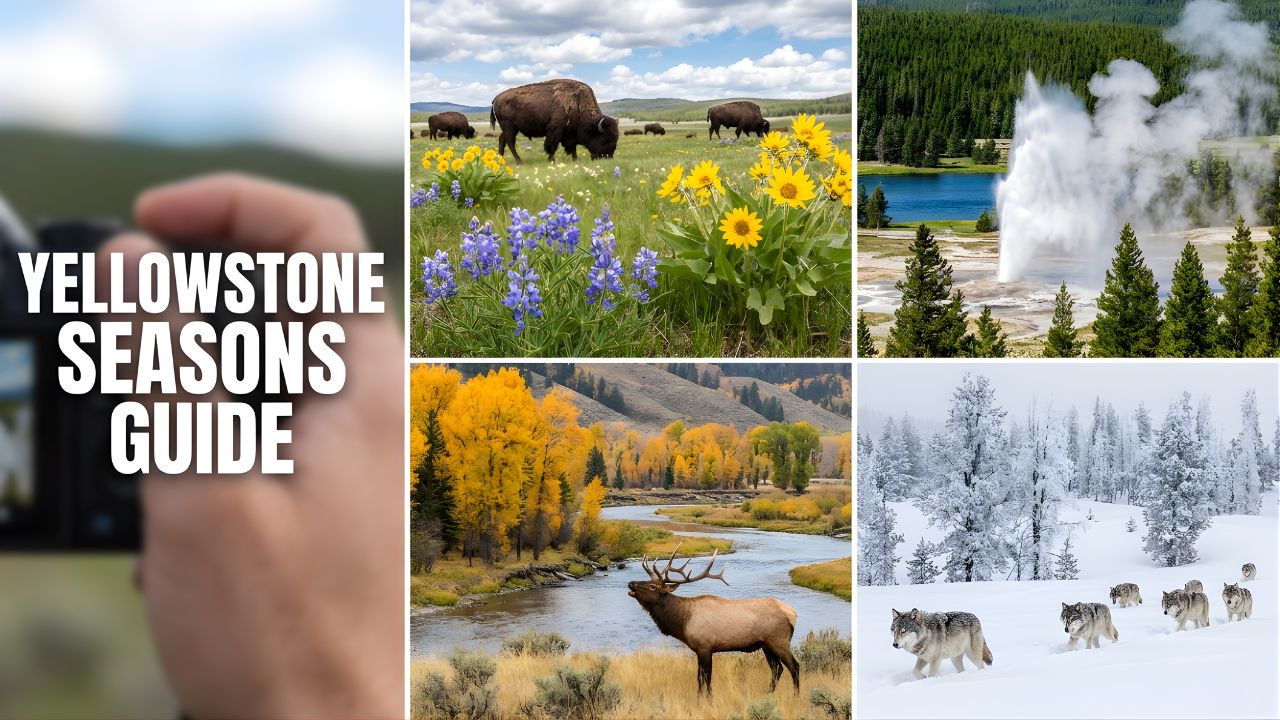
Best Time to Visit Yellowstone Park : If you’ve been dreaming about watching a geyser blast hot water into a cold Wyoming sky, or spotting a grizzly bear lumbering through a meadow at dawn — you already know Yellowstone is on a different level. But here’s what most people don’t realize until it’s too late: when you go matters just as much as going at all.
I’ve visited Yellowstone in three different seasons, and I can tell you firsthand that the experience is completely different depending on the month. The best time to visit Yellowstone Park depends on what you’re chasing — wildlife, solitude, geothermal drama, or just comfortable hiking weather. This guide breaks it all down so you can stop guessing and start packing.
Best Time to Visit Yellowstone Park Quick Facts
| Detail | Info |
|---|---|
| Country | United States |
| Nearest Cities | Jackson, WY / Cody, WY / West Yellowstone, MT |
| Language | English |
| Currency | US Dollar (USD) |
| Time Zone | Mountain Time (MT) — UTC-7 (MDT in summer) |
| Entry Fee | $35 per vehicle (7-day pass) |
| Best Duration of Stay | 4 to 7 days minimum |
| Visa Requirements | Valid US passport or ESTA/visa for international visitors |
Seasonal Travel Guide: When to Go and Why
| Month / Season | Weather | Crowd Level | Best For |
|---|---|---|---|
| January – February | 0°F to 25°F, heavy snow | Very Low | Winter wildlife, snowshoeing, solitude |
| March – April | 20°F to 45°F, unpredictable | Low | Early spring wildlife, fewer tourists |
| May | 35°F to 65°F, variable | Moderate (building) | Newborn animals, partial road opening |
| June | 45°F to 75°F, pleasant | High | Full park access, waterfalls at peak |
| July – August | 60°F to 85°F, sunny | Peak / Very High | All amenities open, long days |
| September | 40°F to 70°F, cooling | Moderate | Fall colors, elk rut, thinner crowds |
| October | 25°F to 55°F, early snow | Low | Dramatic landscapes, quiet trails |
| November – December | Below freezing, heavy snow | Very Low | Snowcoach tours, wolf watching |
Why Late Spring and Early Fall Are Yellowstone’s Secret Sweet Spots
Here’s something the big travel sites don’t tell you enough: July is technically the “best” month by weather, but it’s also when Yellowstone gets absolutely slammed with visitors. In peak summer, the Grand Loop Road can back up for 45 minutes at a bison jam. Campgrounds fill by 9 AM. Parking at Old Faithful? Forget it by 10.




If you want the park’s magic without feeling like you’re at a theme park, aim for late May or September. You still get mild weather, open roads, and active wildlife — but the crowds thin out noticeably after Labor Day.
I hit Yellowstone in mid-September one year and had the Midway Geyser Basin almost entirely to myself at 7 AM. The Grand Prismatic Spring was steaming against cool morning air, and there wasn’t a single selfie stick in sight. That’s the Yellowstone I want you to experience.
The best month to visit Yellowstone Park for wildlife viewing is actually April through early June, when animals are most active after winter. Bears emerge from dens, bison calves are born, and wolves are easier to spot against snowy ridgelines in Lamar Valley.
Summer in Yellowstone: Peak Season Realities (June, July, August)
Summer is Yellowstone’s busiest season by a wide margin, and for good reason. All five entrances are open. Every trail is accessible. The days are long, the weather is warm (though afternoon thunderstorms are common), and every park facility — lodges, campgrounds, visitor centers, restaurants — is fully operational.
But you need to go in with realistic expectations.
July is the single busiest month in Yellowstone’s entire calendar. The park sees over 4 million visitors annually, and the bulk of them arrive between mid-June and late August. If you’re set on a summer trip, here’s how to make it work:
- Arrive at major geyser basins before 8 AM — Old Faithful’s first eruptions of the day draw far smaller crowds, and the light is better for photos anyway
- Book lodging inside the park at least 6 months in advance — Xanterra (the park’s primary lodging concessionaire) releases reservations up to a year ahead, and popular lodges like the Old Faithful Inn fill up almost immediately
- Drive the northern loop on weekdays — most tour groups cluster around the southern loop (Old Faithful, Grand Prismatic, Yellowstone Lake), so the Lamar Valley and Mammoth Hot Springs area stays comparatively quieter
- Plan your geyser visits for early morning or dusk — crowd levels drop by 60% to 70% after 5 PM at most thermal features
June is genuinely my favorite summer month in Yellowstone. The waterfalls are at full power from snowmelt — the Lower Falls of the Yellowstone River is absolutely thundering — and the wildflowers start blooming in the valleys. Crowds are high but not yet at July’s peak insanity.
August brings the best wildlife activity in the evening hours, when bison and elk move into open meadows to graze. The Hayden Valley just before sunset is one of those scenes that makes you understand why this park exists.
Have you ever visited Yellowstone in July and dealt with the crowds? What strategies worked for you? Drop your tips in the comments — I’d genuinely love to hear what you figured out.
The Best Time to Visit Yellowstone for Wildlife: A Honest Breakdown
Wildlife watching is the reason many Americans make the trip to northwest Wyoming in the first place. Yellowstone is one of the last places in the lower 48 where you can see wolves, grizzlies, bison herds, and pronghorn antelope all in a single day. But the best time to see them isn’t necessarily the warmest.
For bears: April through June is prime time. Grizzlies and black bears emerge from hibernation hungry and active, covering a lot of ground. They’re most visible in open meadows at lower elevations. By July, many move to higher terrain and become harder to spot.
For wolves: Winter and early spring (November through April) offer the best wolf watching. Wolves are easier to see against snowy backgrounds, and the Lamar Valley’s resident packs are especially active during winter hunting season. The Yellowstone Wolf Project estimates there are around 100+ wolves in the park ecosystem — but you still need to be at the right valley at first light with good binoculars.
For bison: Year-round, honestly. Yellowstone is home to one of the largest wild bison herds in the US — about 5,000 animals. The most dramatic bison activity happens during the July rut, when bulls clash and the valleys literally shake with noise. It’s wild.
For elk: September and October bring the elk rut, when bull elk bugle and compete for females. It’s one of the most thrilling wildlife spectacles in North America, and September evenings in the Madison Valley or Mammoth area are unforgettable.
The best time to see Yellowstone’s wildlife overall? Come in early May if you want maximum activity and minimum crowds, or in September if you want dramatic behavior (the rut) without the peak summer chaos.
Fall in Yellowstone: The Season Most People Skip (And Shouldn’t)
September and October are arguably the most underrated time to visit Yellowstone National Park. The park stays open, temperatures drop to a comfortable range (high 40s to low 70s in September), and the aspens turn gold across the hillsides.
Here’s what makes fall special beyond the obvious color show:
The elk rut runs from mid-September through mid-October, and it is legitimately one of the most extraordinary wildlife events you can witness in the United States. Bull elk weigh up to 700 pounds, and hearing a 700-pound animal let out a bugling call at dawn while steam rises off a thermal pool nearby — that’s a moment that doesn’t leave you.
Crowds drop noticeably after Labor Day. Campground reservations become possible on shorter notice. Trails feel open again. And the thermal features are particularly dramatic because the cooler air makes the steam more visible against autumn skies.
October gets cold quickly — the first heavy snows can arrive any time after mid-October — but the park is still accessible and hauntingly beautiful. By early November, the north entrance road to Mammoth stays open year-round, but most other roads close to wheeled vehicles.
One honest warning: some services (certain campgrounds, gas stations, and visitor centers) begin closing in late September and October, so check the National Park Service website for current seasonal hours before you go.
Winter in Yellowstone: The Trip Most Americans Never Take (But Should Consider)
I’ll be straight with you: winter in Yellowstone is not for everyone. Temperatures drop below zero regularly. The roads are closed to regular cars. You need to arrive by snowcoach or snowmobile. It takes more planning and costs more money.
But if you’re willing to do it, winter Yellowstone is unlike anything else in the national park system.
The park becomes a silent, steam-filled wonderland. Bison stand shoulder-deep in snow near thermal pools, their fur frosted white. Wolves are at their most active and most visible. The geysers erupt against frozen skies and the contrast is genuinely surreal — I have photos from a January trip to Old Faithful that look like they were taken on another planet.
The best time to visit Yellowstone in winter is mid-January through February, when snow conditions are reliable, wolf activity is high, and snowcoach operators are running full schedules.
Costs run higher in winter logistics:
- Snowcoach tours from West Yellowstone typically run $150 to $250 per person for day trips
- Multi-day snowcoach packages with lodging at the Old Faithful Snow Lodge (the only in-park winter lodging) can run $300 to $500 per night for a room and meals
For more information on winter safety and road conditions, the National Park Service’s Yellowstone winter guide is the most current resource.
Best Time to Visit Yellowstone National Park Wyoming: Planning Your Logistics
No matter what season you’re targeting, a few logistical facts will shape your entire trip.
Entry fees: As of 2025, a standard vehicle pass costs $35 for 7 days. An America the Beautiful Annual Pass costs $80 and covers Yellowstone plus every other national park for a full year — if you’re visiting more than two or three parks in a year, this pass pays for itself immediately.
Where to stay — inside vs. outside the park: This is one of the most common questions travelers have, and the honest answer depends on your priorities.
Staying inside the park (at lodges like Old Faithful Inn, Canyon Lodge, or Lake Yellowstone Hotel) gives you immediate access to the best early-morning and late-evening wildlife opportunities without driving through gate lines. It books out months in advance and costs more — expect to pay $200 to $400+ per night for lodge rooms in peak season.
Staying outside the park in gateway towns like West Yellowstone, MT, Gardiner, MT, or Cody, WY, gives you more affordable lodging options ($100 to $200 per night at mid-range hotels), more dining variety, and better cell service. The tradeoff is adding 30 to 90 minutes of driving each day to reach the park’s interior.
My honest advice: if budget allows, spend at least two nights inside the park. The difference in early-morning access alone is worth it.
How far in advance should you book?
For summer (June through August), book lodging and campsites 6 to 12 months in advance. Xanterra opens reservations exactly 13 months ahead for lodge rooms and many sites fill within hours. For fall or winter, you have more flexibility — three to six months ahead is usually sufficient.
For camping, the Recreation.gov system handles most Yellowstone campsite reservations. The Fishing Bridge RV Park and a few other sites open for reservations six months out to the day.
What’s the Rainiest Month in Yellowstone? Weather Realities You Need to Know
June is statistically Yellowstone’s wettest month, with average precipitation around 2.5 inches and frequent afternoon thunderstorms. May comes close. If you’re hiking, pack rain gear regardless of the forecast — Yellowstone weather changes fast, and a clear morning can become a thunderstorm by 2 PM at almost any time of year.
July and August are drier and sunnier overall, though afternoon storms still roll through. September typically has mild, stable weather with lower humidity — which is part of why it’s such a pleasant time to visit.
Snow is possible in every single month of the year in Yellowstone. The park sits at an average elevation of about 8,000 feet, and late spring snowstorms in May are not unusual. I’ve hiked in a t-shirt in the morning and had snow by 3 PM in early June. Layering is not optional — it’s mandatory.
Check the U.S. National Weather Service forecast for Yellowstone before each day of your visit. Their hourly forecasts are surprisingly accurate for mountain conditions.
Packing Essentials for Yellowstone (Based on Season)
Spring and Fall:
- Waterproof hiking boots (trails can be muddy or snowy)
- Insulating mid-layer (fleece or down jacket)
- Rain jacket — non-negotiable
- Bear spray ($40 to $50 to rent or buy in gateway towns — do not skip this)
- Binoculars (10×42 is the sweet spot for wildlife watching)
Summer:
- Sunscreen and a wide-brim hat (UV exposure at 8,000 feet is intense)
- Lightweight layers for temperature swings
- Water filter or purification tablets for backcountry use
- Mosquito repellent for June and July mornings near water
Winter:
- Insulated waterproof boots rated to -20°F
- Hand warmers (chemical and rechargeable)
- High-SPF sunscreen — snow reflection doubles UV exposure
- Thermal base layers and a heavy outer shell
Best Time to Visit Yellowstone Park FAQ
Q : What is the best month to go to Yellowstone National Park?
Ans – September is the single best month for most travelers. The weather is mild, crowds thin out after Labor Day, the elk rut is underway, and fall colors add visual drama. If wildlife is your priority and you don’t mind early spring cold, late April through May is equally compelling for bear and wolf activity.
Q : How many days is enough to see Yellowstone?
Ans – You need at least four full days to cover Yellowstone’s two main loops (the Grand Loop Road is 142 miles total). Five to seven days is ideal if you want to hike beyond roadside stops, explore the Lamar Valley for wildlife at dawn, and spend real time at the thermal basins. With fewer than three days, you’ll feel rushed.
Q : How much does it cost to enter Yellowstone?
Ans – The standard vehicle entry fee is $35 for a 7-day pass. Motorcycles are $30. Individual entry (on foot or bike) is $20. The America the Beautiful Annual Pass at $80 covers entry for the full year across all national parks and is the smartest buy for anyone visiting two or more parks.
Q : Is it better to stay inside Yellowstone or outside?
Ans – For the best experience, stay inside for at least part of your trip. In-park lodging puts you minutes from wildlife at dawn and dusk — the hours when animal activity peaks. Gateway towns like Gardiner and West Yellowstone are good options for lower costs and more dining choices, but budget extra driving time each day.
Q : What is the rainiest month in Yellowstone?
Ans – June is typically the wettest month, with regular afternoon thunderstorms and around 2.5 inches of average precipitation. May is a close second. Plan outdoor activities for mornings and keep afternoons flexible.
Q : How far in advance should I reserve Yellowstone lodging or campsites?
Ans – For summer visits, book 6 to 12 months ahead — popular lodges and campgrounds fill almost immediately when reservations open. Xanterra’s online system opens lodge reservations 13 months in advance. For fall trips, 3 to 6 months ahead is usually sufficient. For winter, book snowcoach tours and Snow Lodge rooms at least 3 to 4 months ahead.
The Bottom Line: What’s Really the Best Time to Visit Yellowstone?
Here’s my honest summary after three separate visits:
Go in September if you want the best all-around experience — comfortable weather, manageable crowds, dramatic wildlife, and stunning fall scenery. It’s the month that gives you the most Yellowstone for the least hassle.
Go in late April or May if wildlife is your primary reason for going. You’ll endure unpredictable weather and some road closures, but you’ll see animals in a way that summer visitors simply don’t.
Go in July if you must, but book everything 6 to 12 months out, arrive at attractions by 7 AM, and accept that you’ll share this magnificent place with a few hundred thousand other people.
And if winter ever calls to you — answer it. A snowcoach ride into Old Faithful at dawn, with steam rising off the basin and wolves howling somewhere in the distance, is one of the most extraordinary things you can do in this country.
Yellowstone doesn’t have a bad time to visit. It just has times that suit different travelers better than others. Now you know which one is yours.
What season are you planning to visit Yellowstone? Is this your first trip or are you coming back for more? Tell me in the comments — I’d love to know what drew you to this place.
For current travel advisories and entry requirements, visit the official U.S. State Department travel page if you’re an international visitor planning this trip.