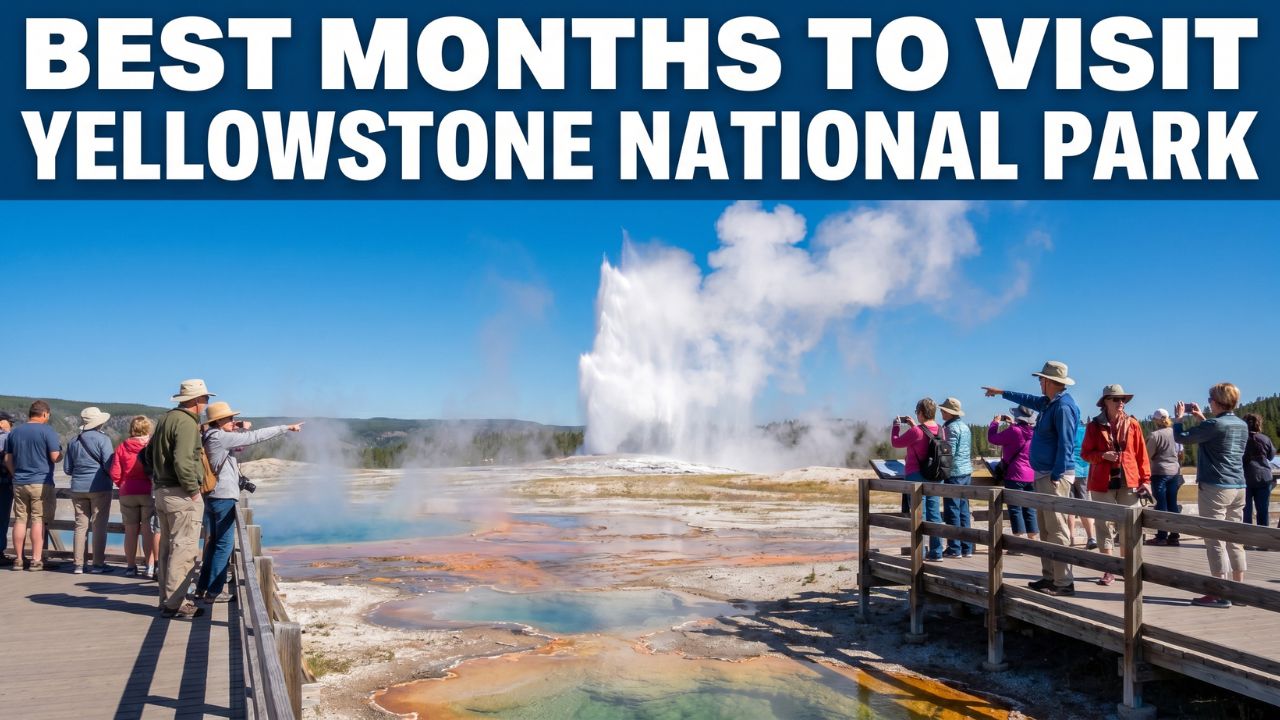
Best Months to Visit Yellowstone National Park – If you’ve been dreaming about Yellowstone, I’m going to save you from making the same mistake most visitors make — booking your trip at the wrong time of year and spending half of it stuck in traffic jams behind a bison herd with no pullout in sight.
The best months to visit Yellowstone National Park are May, September, and early October — and I’ll tell you exactly why in this guide. But “best” depends entirely on what you want out of the trip. Whether you’re chasing wildlife, avoiding crowds, catching geysers against a snowy backdrop, or just trying to keep your budget from exploding, the timing of your visit changes everything.
I’ve broken this down by every season so you can match your travel style to the right window. Let’s get into it.




Best Months to Visit Yellowstone National Park
| Detail | Info |
|---|---|
| Country | United States |
| Nearest Major Cities | Jackson, WY / Bozeman, MT / Salt Lake City, UT |
| Primary Language | English |
| Currency | US Dollar (USD) |
| Time Zone | Mountain Time (MT) — UTC-7 in summer |
| Entrance Fee | $35 per vehicle (7-day pass) |
| Visa Requirements | Standard US entry rules apply for international visitors |
| Best Duration of Stay | 4–7 days minimum to cover the major regions |
Seasonal Overview: When to Go and Why
| Month / Season | Weather | Crowd Level | Best For |
|---|---|---|---|
| January–March | Brutal cold, heavy snow (-10°F to 25°F) | Very Low | Winter wildlife, snowcoach tours, solitude |
| April–May | Warming up, muddy roads, wildflowers starting | Low–Moderate | Spring wildlife (newborn animals), waterfalls |
| June–August | Warm (50°F–80°F), full park access | Peak Crowds | Families, first-timers, all amenities open |
| September–October | Crisp, golden light, elk rut | Moderate (Sep) / Low (Oct) | Wildlife, photography, fall foliage |
| November | Cold returns, most facilities close | Very Low | Solitude, early winter landscapes |
Why May and September Are the Best Months to Visit Yellowstone
Let me be straight with you: July and August get all the attention because school is out and the weather is comfortable. But if you actually want to experience Yellowstone rather than experience the parking lot at Old Faithful, those two shoulder months are where the real magic happens.
May is when the park wakes up. Snowmelt is feeding the waterfalls at maximum force — the Lower Falls in the Grand Canyon of the Yellowstone are absolutely roaring. Wolf packs are active and visible. Bears are out of hibernation and moving through open meadows, meaning you can actually spot them from a distance. Newborn bison calves are stumbling around the Lamar Valley. The roads in the northern part of the park typically open by mid-April, and by late May, almost everything is accessible.
Crowds in May are still manageable. You’ll share the park with serious wildlife photographers and experienced hikers, not the summer wall-to-wall tour buses. Lodges have availability, and you won’t be fighting for a picnic table at Mammoth Hot Springs.
September gives you everything summer has — full road access, good weather, all facilities open — but the summer crowds have thinned by at least 30 to 40 percent after Labor Day. The elk rut kicks in hard, and if you’ve never heard a bull elk bugling at dawn in Hayden Valley, I genuinely can’t overstate how primal and unforgettable it is. The aspens start turning golden. Morning light is cooler and sharper, which means better photography. Temperatures are perfect for long hikes without sweating through your clothes.
Have you been to Yellowstone in either May or September? I’d love to hear what your experience was like — drop a comment below.
Summer in Yellowstone: What No One Tells You About June, July, and August
Summer is absolutely the most popular time to visit Yellowstone, and there are legitimate reasons for that. All five park entrances are open. Every hotel, lodge, and campground is operating. The weather is reliable. Hiking trails at higher elevations are finally snow-free. If this is your first visit and you have kids, summer works.
But here’s what the glossy travel magazines skip over: the crowds in July are genuinely intense. The Old Faithful area can have 5,000 to 10,000 visitors on a single summer day. Parking lots fill by 8 AM. The road between Mammoth and Tower can turn into a 45-minute standstill because of a single bison herd crossing. Restaurant wait times at Canyon Village can stretch to an hour.
The park gets around 4.5 million visitors per year, and roughly half of them show up between June and August.
That said, summer isn’t all bad if you play it smart:
- Arrive at major geyser basins before 8 AM or after 6 PM — the light is better anyway.
- Book lodging inside the park at least 6 months in advance. Seriously.
- Plan to do your hiking on weekdays and spend weekends at lesser-known spots like the Bechler region.
- The Norris Geyser Basin is often less crowded than the Upper Geyser Basin and just as impressive.
June is the best month within summer. Snowmelt is still running, wildflowers are peaking, and the crowds haven’t fully arrived yet. The week after Memorial Day is a particular sweet spot — school is mostly still in session and the hordes haven’t descended.
The Best Time to Visit Yellowstone for Wildlife
If wildlife is your main reason for going — and honestly, for most people, it should be — then April through May and September through October are your windows.
The Lamar Valley in the park’s northeastern corner is often called “America’s Serengeti,” and that’s not an exaggeration. Early morning drives along the Lamar Valley road in September can turn up wolf packs, grizzly bears, herds of bison, pronghorn, and elk all within the same two-hour stretch. This is the kind of wildlife viewing that people fly across the country for.
Here’s a breakdown of the best wildlife timing:
- Bears: Best spotted in spring (April–May) and fall (September–October) when they’re feeding aggressively to build fat reserves. Look for grizzlies digging for roots in open meadows near Hayden and Lamar Valleys.
- Wolves: Lamar Valley, especially at dawn. Winter and early spring give you the best visibility since vegetation is low. But September mornings are excellent too.
- Elk: The September–October rut is the peak experience. Herds gather in Mammoth Hot Springs and Hayden Valley; bulls bugle and spar constantly.
- Bison: Year-round, but calving season in May brings the iconic orange “red dogs” (bison calves) alongside their mothers in the Lamar Valley.
- Bald Eagles and Osprey: Spring and summer along the Yellowstone River, especially near Fishing Bridge.
One tip I’ll give you that most guides skip: bring a spotting scope, not just binoculars. Wolves and bears in Lamar Valley are often a mile or more away, and 10x binoculars won’t cut it. Serious wildlife watchers use 60x–80x spotting scopes, and you’ll see the same folks pulled over at the same roadside turnouts every single morning.
Winter in Yellowstone: The Most Underrated Visit
Winter Yellowstone is a completely different park, and I’d argue it’s one of the most unique travel experiences available anywhere in the United States.
From late December through February, most of the park’s roads close to regular vehicles. You can only access the interior by snowcoach (a heated vehicle with ski-like treads) or snowmobile tour. The park becomes profoundly quiet. Bison move through frosted thermal basins with steam rising around them. Hot springs glow turquoise against white snow. Predator-prey dynamics are on full display because snow tracking is easy — you can follow wolf prints across a meadow and find the story of what happened overnight.
Temperatures regularly drop to -20°F or colder, so this isn’t casual tourism. But if you’re prepared, it’s extraordinary.
The main winter hub is Mammoth Hot Springs, which stays open year-round. Old Faithful Snow Lodge also operates in winter and offers snowcoach tours into the interior.
Cost-wise, winter lodging inside the park is cheaper than summer rates, and snowcoach tours range from around $120 to $250 per person depending on the route. International visitors, in particular, are often stunned by what Yellowstone looks like under snow because it gets almost no international attention in winter.
The biggest practical catch: book snowcoach tours well in advance because capacity is limited. The Xanterra concessionaire handles most tours, and they do fill up, especially over the holiday weeks.
Spring in Yellowstone: Mud Season and Why You Should Go Anyway
April and early May have a reputation as “mud season,” and it’s earned. Roads at higher elevations are still closed. Trailheads can be marshy. Some facilities haven’t opened yet.
But here’s the thing — the advantages of spring Yellowstone outweigh the inconveniences if you know what you’re doing.
The northern range road (Gardiner to Cooke City via Lamar Valley) stays open year-round and is the best wildlife corridor in the park. This is where you want to spend your time in spring. Wildlife concentrations here are extraordinary because animals descend to lower elevations after winter. Wolf pack activity is high. Bears are freshly out of hibernation and visible in open terrain. Spring wildflowers start appearing in lower-elevation thermal areas.
The Yellowstone River is running hard and fast with snowmelt, making the canyon waterfalls some of the most dramatic they’ll be all year. Artist Point looking down into the Grand Canyon of the Yellowstone in May is jaw-dropping in a way that’s hard to replicate in August when the flow has dropped.
A practical note: check the National Park Service road opening schedule before you go because spring road openings can be delayed by late snowfall. The NPS posts updates regularly.
ow Much Does a Trip to Yellowstone Cost?
Let’s talk real numbers, because vague estimates don’t help you plan.
A moderate trip for two adults staying 5 nights will run approximately:
- Park entrance fee: $35 (7-day vehicle pass — covers re-entry)
- Lodging inside the park: $150–$350 per night depending on lodge and room type. Old Faithful Inn costs more than Canyon Cabins. Budget motels in nearby Gardiner or West Yellowstone run $80–$150/night.
- Campgrounds: $15–$30/night for basic sites; most require reservations through Recreation.gov.
- Food: Budget $40–$80/day per person for meals. In-park dining is expensive and mediocre. Packing a cooler and groceries from Bozeman or Jackson significantly cuts costs.
- Gas: Yellowstone is enormous — 3,472 square miles. Budget for 100–150 miles of driving per day inside the park. At current prices, that adds up.
- Activities: Most are free. Guided tours, horseback riding, or whitewater rafting outside the park add $60–$150 per activity.
A realistic 5-day trip budget for two people: $1,200–$2,500 depending on accommodation choices. Staying outside the park in West Yellowstone or Gardiner and driving in each day is the most common budget move.
Getting There: Where to Fly In
There’s no single answer here because Yellowstone has five entrance gates spread across three states.
- Bozeman Yellowstone International Airport (BZN) — Best option for the north and northeast entrances (Lamar Valley access). About 90 minutes to the Gardiner entrance.
- Jackson Hole Airport (JAC) — Best for the south entrance, which connects to Grand Teton National Park. Often pricier to fly into but a stunning arrival.
- Billings Logan International Airport (BIL) — Larger airport in Montana, about 2.5 hours to the northeast entrance.
- Salt Lake City International Airport (SLC) — Larger hub with more flight options, but 5–6 hours to the south entrance. Works for a combined Utah–Wyoming road trip.
For most Americans flying from the East Coast or Midwest, Bozeman is the most practical combination of price and access. Denver is also a common connection hub for all three Montana and Wyoming airports.
Rent a car without question — you cannot do Yellowstone without one. A high-clearance vehicle isn’t required in summer but is useful in spring.
How Far in Advance Should You Plan Your Trip?
If you want to stay inside the park at one of the historic lodges, the honest answer is: 6 to 12 months in advance for summer visits. Old Faithful Inn, the flagship lodge inside the park, opens reservations a full year out and fills up fast.
Campground reservations on Recreation.gov open months ahead and the most popular sites (like Madison Campground) go within minutes of availability opening.
For shoulder season visits in September or May, you have more flexibility — 3 to 6 months should be sufficient for most options. Winter is the most forgiving for last-minute planning, though snowcoach tours fill up over holiday periods.
For international visitors, the U.S. State Department travel information covers current entry requirements and visa guidance.
What’s your biggest hesitation about planning a Yellowstone trip — is it the timing, the cost, or the sheer size of the park? Tell me in the comments and I’ll point you in the right direction.
Best Months to Visit Yellowstone National Park FAQ
Q : What is the best month to travel to Yellowstone?
Ans – September is the single best month for most visitors — crowds drop noticeably after Labor Day, the elk rut is active, fall colors are starting, and all facilities are still open. May is the runner-up for wildlife lovers and waterfall seekers.
Q : How much does an average trip to Yellowstone cost?
Ans – A 5-day trip for two adults typically runs between $1,200 and $2,500 total, depending on whether you stay inside or outside the park. Lodging is the biggest variable. In-park lodges cost $150–$350/night; staying in gateway towns like Gardiner or West Yellowstone cuts that significantly.
Q : How many days is enough to see Yellowstone?
Ans – Four days is the minimum to hit the major highlights — Old Faithful, Grand Prismatic Spring, Grand Canyon of the Yellowstone, and the Lamar Valley. Five to seven days lets you add hikes, explore the thermal basins thoroughly, and give wildlife watching the slow, patient mornings it deserves.
Q : What is the rainiest month in Yellowstone?
Ans – June is typically the wettest month in Yellowstone, with afternoon thunderstorms being common. The southern and western parts of the park receive more precipitation than the drier northeast. Pack a waterproof layer regardless of when you visit.
Q : How far in advance should I plan a Yellowstone trip?
Ans – For summer (June–August), book lodging and campgrounds 6–12 months out. For September and May, 3–6 months is generally sufficient. Winter visits are the most flexible, though holiday snowcoach tours do fill up.
Q : Where do I fly into for Yellowstone?
Ans – Bozeman (BZN) is the best airport for most visitors, offering easy access to the north and northeast entrances including Lamar Valley. Jackson Hole (JAC) is best if you’re combining Yellowstone with Grand Teton. Salt Lake City (SLC) works as a budget hub for longer road trip itineraries.
Planning your Yellowstone trip soon? Drop your travel dates in the comments — I’m happy to help you figure out the best strategy for what you want to see.