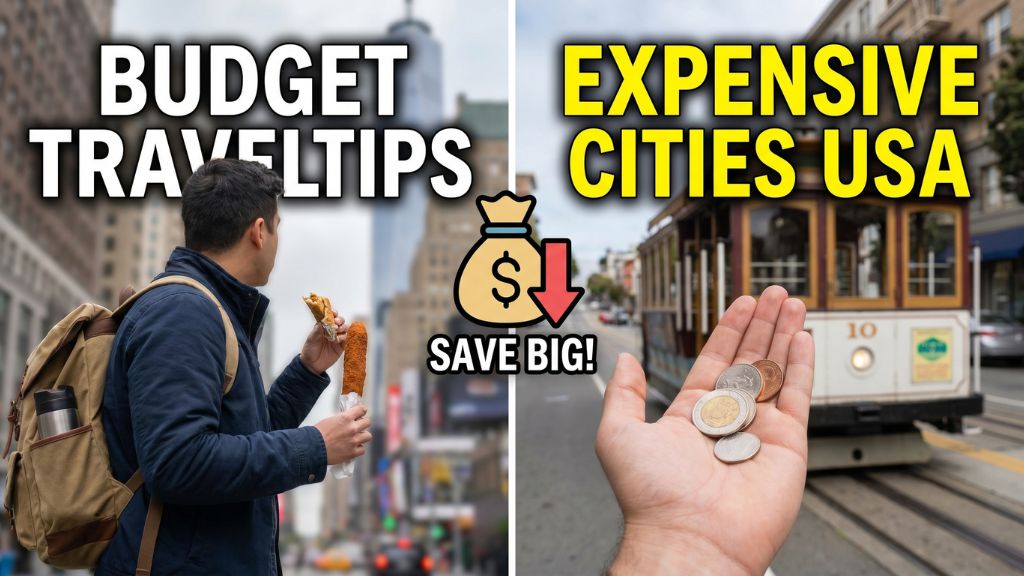
Budget Travel Tips for Expensive Cities USA – How to see America’s priciest destinations — New York, San Francisco, Miami and beyond — without going broke.
Let’s be honest — some American cities will drain your wallet faster than you can say “check, please.” New York, San Francisco, Honolulu, Boston, Miami… these places have a reputation for being wildly expensive, and for good reason. But here’s what most travel sites won’t tell you: the gap between the traveler who spends $400 a day and the one who spends $120 is almost entirely strategy, not sacrifice. I’ve done both, and the $120 day was often more fun.
This guide is built on real trips, honest price checks, and the kind of tips you usually only learn after you’ve already made the expensive mistakes. If you’re planning a visit to one of America’s biggest cities on a budget — and you want to actually afford the trip — keep reading.
 My Little Babog Family Lifestyle Travel Blog
 Best Places to Visit in Colorado for First Time Visitors (2026 Guide)
 Cheapest Month to Fly to New York
 What Is the Cheapest Month to Fly to Puerto Rico
 15 Best Place & Best Time to Travel to Puerto Rico
 Best Italian Places to Travel: The Only Guide You’ll Need Before Booking Your Flight
Quick Facts: Traveling the USA on a Budget
| Country | United States of America |
| Currency | US Dollar (USD) |
| Language | English |
| Time Zones | ET, CT, MT, PT (plus AK and HI) |
| Visa Requirements | US citizens: none. International visitors: check ESTA or visa at travel.state.gov |
| Best Duration Per City | 3–5 days (most major cities) |
| Average Daily Budget | $80–$140/day depending on city |
| Tipping Culture | 18–22% at restaurants; $1–2/drink at bars |
Why America’s Most Expensive Cities Are Still Worth Visiting
Before we get into the money-saving mechanics, let’s address the obvious question: why bother? Why not just visit cheaper cities?
Because New York City at 7 a.m. in October, walking across the Brooklyn Bridge while the skyline turns gold, is not something you can replicate in a cheaper zip code. Because San Francisco’s fog rolling over the Golden Gate is genuinely one of the most stunning things you’ll see in this country. Because South Beach at dusk, or the French Quarter on a Tuesday night, or Pike Place Market on a Saturday morning — these places have an energy that justifies the airfare.
The goal isn’t to avoid expensive cities. The goal is to visit them without being financially reckless about it. And with the right budget travel tips for expensive cities in the USA, you can do exactly that.
When to Go: Seasonal Travel Guide for Major US Cities
This table might be the most money-saving thing in this entire article. Timing your trip correctly can cut hotel costs by 30–50% in most major American cities.
| Month / Season | Weather | Crowd Level | Best For |
|---|---|---|---|
| Jan – Feb | Cold in NYC/Boston/Chicago; mild in Miami/LA | Low to moderate | Budget-focused travelers; NYC and Chicago deals; Miami beach season kicks off |
| Mar – May | Spring warmth building; shoulder season most cities | Moderate, rising | Best balance of weather and price; NYC and SF in April are stunning |
| Jun – Aug | Hot and humid in NYC/Miami; foggy in SF; warm in LA | Peak — highest prices | Families and international tourists; book 3+ months ahead |
| Sep – Nov | Perfect fall weather in Northeast; still warm in South | Moderate, dropping | Best overall window — fall foliage in Boston/NYC, lower hotel rates |
Pro tip: The single best value window for New York City is the last two weeks of January into February. Hotels that charge $280/night in October drop to $140–$160. The city is still fully alive — Broadway is running, restaurants are packed, museums are open. You just need a good coat.
Accommodation Strategies That Actually Work in Pricey American Cities
Hotels in cities like San Francisco and New York can easily run $250–$450/night for a mid-range room. That’s not an exaggeration — I’ve watched the prices. But you don’t have to pay that, and you don’t have to sleep in a bunk bed with strangers to avoid it.
In New York, skip Midtown entirely. Look at Long Island City in Queens — you’re one subway stop from Grand Central, and you can find solid 3-star hotels for $110–$150/night. In San Francisco, the Outer Sunset and Inner Richmond neighborhoods give you BART access into downtown but at significantly lower prices than Union Square or SoMa. In Miami, Wynwood and Little Havana offer Airbnb options that are 40% cheaper than South Beach with better local character.
The 3-week window before your stay is often when last-minute hotel deals hit their lowest point in US cities, especially for midweek stays. Apps like HotelTonight are genuinely useful here.
- Book refundable rates and cancel if something cheaper opens up closer to your trip
- Use hotel loyalty programs even if you only stay 2 nights — points accumulate faster than you’d think
- Search for hotels in the city’s outer neighborhoods and check transit times (often 15 minutes or less)
- Consider serviced apartments for stays of 4+ nights — often cheaper, plus you save on meals with a kitchen
Food: How to Eat Well in Expensive American Cities Without Spending $80 a Day
This is where most visitors to places like New York and San Francisco quietly hemorrhage money. A casual lunch can run $25 per person. A dinner for two with a glass of wine each can easily hit $100 before tip. Over five days, that adds up in a hurry.
My Little Babog Family Lifestyle Travel Blog
Best Places to Visit in Colorado for First Time Visitors (2026 Guide)
Cheapest Month to Fly to New York
What Is the Cheapest Month to Fly to Puerto Rico
15 Best Place & Best Time to Travel to Puerto Rico
Best Italian Places to Travel: The Only Guide You’ll Need Before Booking Your Flight
But here’s what I’ve learned after years of eating my way through American cities on a tight line: the best food in almost every major US city is not in the expensive restaurants.
In New York, the $2.50 dollar pizza slice from a no-name shop in the East Village will beat any $22 “artisanal” pizza. In San Francisco, the burritos in the Mission District — specifically on 24th Street — are legendary and cost $11–$14. In New Orleans, a muffuletta from Central Grocery costs around $15 and is one of the best sandwiches in America. In Chicago, a proper Chicago-style hot dog runs $4–$6 and is not something you forget.
- Hit food halls for lunch: Grand Central Market in LA, Chelsea Market in NYC, Reading Terminal in Philadelphia all offer options at $10–$15 per meal
- Use Too Good To Go, which sells surplus food from restaurants at 50–70% off — available in NYC, Chicago, LA, and Boston
- Eat your biggest meal at lunch — prix fixe lunch menus at nice restaurants are often $28–$38 for two courses vs. $60+ at dinner
- Trader Joe’s and Whole Foods hot bars offer prepared meals for $8–$12 for budget mid-trip meals
Have you found a hidden food gem in a major US city that completely surprised you? Drop it in the comments — I’m building a running list and I’d genuinely love to add your find.
Getting Around: Budget Travel Tips for Expensive Cities USA Transport
The mistake most visitors make is defaulting to Uber and Lyft for every trip. In New York, that’s $20–$35 a ride in traffic. In a week, you’ve spent more on rideshares than your accommodation.
New York City: The subway is $2.90 per ride, or grab an unlimited 7-day MetroCard for $34. For a 5-day trip with 4–6 rides a day, that math is obvious.
San Francisco: BART connects SFO airport to downtown for $10.55 — versus $45–$65 for a cab. Within the city, Muni passes run $24 for a 3-day unlimited. The cable cars are $8 a ride and worth it once for the experience.
Chicago: The CTA “L” train covers the entire city and runs 24 hours on some lines. A 3-day pass is $20. Divvy bike share runs $1/ride or $15 for a 3-day pass, and the lakefront trail is one of the best cycling paths in the country.
Washington D.C.: The Metro is clean, reliable, and covers all major attractions. Most of the National Mall sights are walkable from each other, which helps enormously.
Free and Cheap Things to Do in America’s Most Expensive Cities
Here’s the thing most people don’t realize: many of the very best things to do in expensive US cities are completely free.
New York City: The Staten Island Ferry runs 24 hours a day, costs nothing, and gives you the best view of the Statue of Liberty you’ll find anywhere. Central Park is endlessly walkable. The High Line elevated park is free. The New York Public Library main branch on 5th Avenue is free to enter and genuinely stunning inside.
Washington D.C.: Every Smithsonian museum is free, always — the National Air and Space Museum, the National Museum of African American History and Culture, the Natural History Museum, and 17 others. The National Mall, the monuments, the memorials — all free. This is one of the best cities in America for the free-activity ratio.
Chicago: Millennium Park and Cloud Gate (the Bean) are free. The Chicago Riverwalk is free and beautiful. Lincoln Park Zoo is free admission. The lakefront in summer is essentially a 26-mile free park.
New Orleans: Bourbon Street and Frenchmen Street have live music spilling out of every door — you can listen for free and tip the musicians well. The French Quarter itself is a walking museum, and City Park is massive, beautiful, and free.
What’s the one free thing you did in a US city that you’d tell everyone to do first? I want to know — leave it below.
City-by-City Daily Budget Breakdown
Here’s a realistic daily budget breakdown for each major expensive US city, built for a thoughtful traveler who wants quality without waste.
| City | Budget Daily Cost | Mid-Range Daily | What’s Included |
|---|---|---|---|
| New York City | $120–$150 | $220–$300 | Hostel/outer borough hotel + subway + street food + 1 sit-down meal |
| San Francisco | $130–$160 | $240–$320 | Budget hotel/hostel + BART + Mission burritos + Golden Gate walk |
| Miami | $110–$140 | $200–$280 | Wynwood Airbnb + Lyft + grocery + beach (free) |
| Boston | $100–$130 | $180–$260 | Cambridge accommodation + T pass + seafood lunch |
| Washington D.C. | $90–$120 | $170–$240 | Budget hotel near Metro + Metro pass + free Smithsonians all day |
| Chicago | $90–$115 | $160–$220 | Loop-adjacent hotel + CTA pass + deep dish pizza + Riverwalk |
| Honolulu | $150–$200 | $280–$380 | Budget hotel/hostel + rental car or bus + plate lunch + beach (free) |
| Los Angeles | $110–$145 | $200–$270 | Hollywood/Silver Lake stay + Metro/Lyft mix + food trucks |
Note: These costs are per person, per day and assume solo accommodation. Costs drop noticeably if you’re traveling as a couple sharing a room — often 30–40% less per person.
Packing Smart for Budget Travel in Expensive US Cities
What you bring affects what you spend. These five items genuinely make a financial difference on city trips:
- Reusable water bottle: NYC, Chicago, and Boston all have excellent tap water. Not buying bottled water saves $3–$5 a day — that’s $15–$25 over a 5-day trip, which is basically a meal
- Comfortable walking shoes: Cutting your rideshare bill by walking an extra 15 minutes saves $12–$18 per day. This only works if your feet aren’t screaming at mile three
- Portable phone charger: Getting stranded without GPS in an unfamiliar city means an expensive cab. A $25 battery pack prevents that scenario entirely
- One versatile light layer: American cities have aggressive air conditioning. Museums, restaurants, and transit are all freezing in summer. One packable jacket handles everything
- Travel credit card: A card with travel rewards (Chase Sapphire, Capital One Venture) earns meaningful money back on hotel and flight purchases over the trip
Health, Safety, and Practical Notes for Visiting Expensive US Cities
American cities are generally safe for tourists in their main visitor areas, but like anywhere, you need basic street sense. In New York, some outer lines are better avoided after midnight if you don’t know the area. In San Francisco, the Tenderloin neighborhood is best avoided at night. In Chicago, stay aware south of the Loop late in the evening.
For general travel advisory information, the U.S. Department of State maintains helpful resources at travel.state.gov. International visitors should check their country’s embassy guidance before arriving.
Medical costs in the US are genuinely high, even for minor issues. If you’re visiting from another country, travel insurance is not optional — it’s essential. Even for Americans visiting from another state, a basic travel insurance policy that covers trip cancellation costs $40–$80 and is well worth having.
For health requirements and vaccination guidance relevant to US travel, the CDC maintains up-to-date resources at wwwnc.cdc.gov/travel.
Ready to Plan Your Trip? Have questions about budgeting for a specific city not covered here? Drop them in the comments and I’ll answer every one personally. And if you’ve got a budget tip that saved you real money in an expensive US city, share it — this community is built on exactly that kind of knowledge.