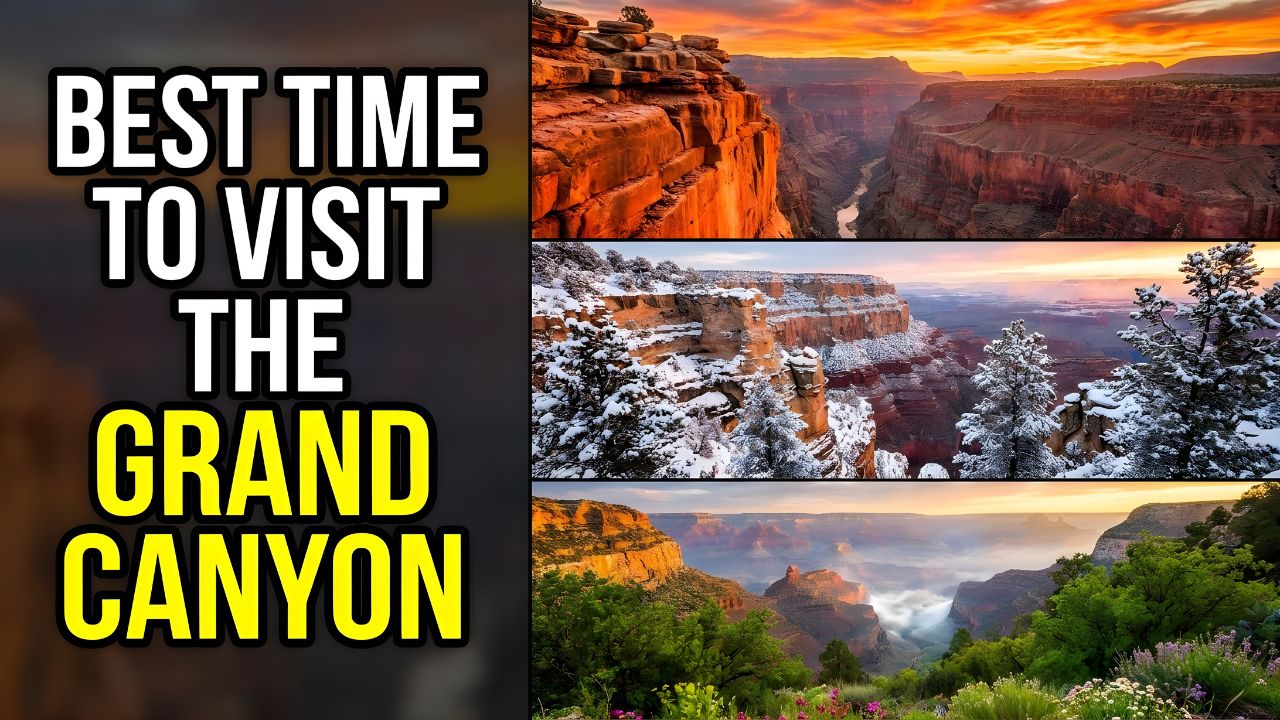
The Best Time to Visit the Grand Canyon – Let me be straight with you — I’ve been to the Grand Canyon three times, and each visit felt like a completely different place. Same canyon, wildly different experience. The first time I went in July, I was drenched in sweat before 9 a.m., fighting crowds at every overlook, and I nearly passed out on a trail that every ranger had basically begged me not to hike midday. The second time I went in October, and honestly? That’s when I really saw it.
The best time to visit the Grand Canyon depends entirely on what kind of traveler you are — and I’m going to help you figure that out before you book a single thing.
Whether you’re planning a family trip, a solo hike, a romantic getaway, or just want to stand at the rim and stare into one of the most jaw-dropping views on Earth, timing is everything here. Let’s get into it.






The Best Time to Visit the Grand Canyon
| Detail | Info |
|---|---|
| Country | United States |
| Nearest City | Flagstaff, AZ (about 80 miles away) |
| Language | English |
| Currency | US Dollar (USD) |
| Time Zone | Mountain Standard Time (Arizona does not observe DST) |
| Visa Requirements | Valid US ID for Americans; ESTA or visa for international visitors |
| Park Entry Fee | $35 per vehicle (valid 7 days) |
| Best Duration of Stay | 2–4 days minimum |
The Grand Canyon by Season: A Complete Month-by-Month Breakdown
This is the table I wish someone had handed me before my first trip. It covers both the South Rim (open year-round) and the North Rim (open mid-May through mid-November).
| Month / Season | Weather | Crowd Level | Best For |
|---|---|---|---|
| January – February (Winter) | 20–45°F on the rim; snow possible | Very Low | Solitude, photography, budget travel |
| March – April (Spring) | 40–70°F; mild and unpredictable | Moderate (rising in April) | Hiking, wildflowers, comfortable temperatures |
| May (Late Spring) | 60–80°F on rim; hot in canyon | High | Rim hiking, clear skies, pre-summer crowds |
| June (Early Summer) | 80–100°F+ inside canyon | Very High | Avoid inner canyon hikes; rim views only |
| July – August (Monsoon) | Hot + afternoon thunderstorms | Very High | Flash flood risk; crowds peak |
| September – October (Fall) | 50–75°F; crisp and clear | Moderate | Best overall — hiking, photography, fall color |
| November (Early Winter) | 30–55°F; cool and dry | Low | Peaceful rim walks, budget-friendly |
| December (Winter) | 20–40°F; possible snow | Very Low | Snow photography, solitude, holiday closures possible |
Why Spring and Fall Are the Best Times to Visit the Grand Canyon
If you ask any veteran hiker or experienced park ranger, they’ll tell you the same thing: March through May and September through October are the sweet spots.
Here’s why spring works so well. The South Rim sits at around 7,000 feet in elevation, which means temperatures are genuinely comfortable — think 50s and 60s in the morning, warming up into the 70s by afternoon. The inner canyon trails like Bright Angel and South Kaibab are hikeable without the brutal heat that makes them downright dangerous in summer. Wildflowers pop up along the Tonto Platform in April, and the light — especially in the early morning — hits the red and orange canyon walls in a way that makes every photo look like it was taken by a professional.
Fall might be even better. September and October bring lower humidity, cooler temperatures, and crowds that are noticeably thinner than peak summer. I went in early October on my second visit, and at Mather Point — usually one of the most packed overlooks in the park — I counted fewer than 20 people at sunrise. In July, that same spot can have hundreds. The difference is staggering.
The light in fall is also softer and warmer, which sounds like a photography nerd thing but trust me, you’ll feel it even if you’re shooting on your iPhone.
Have you visited the Grand Canyon in spring or fall? Drop a comment below and tell me which season worked best for you — I’d genuinely love to know.
Best Time to Visit the Grand Canyon South Rim
The South Rim is what most people picture when they think of the Grand Canyon — and it’s open 365 days a year. That makes it incredibly flexible, but also means it absorbs the full brunt of the park’s 6 million+ annual visitors.
Peak season runs from Memorial Day weekend through Labor Day, and during those months, the South Rim is genuinely overwhelming. Parking at Grand Canyon Village fills by 7 a.m. Most viewpoints have wall-to-wall people. The shuttle buses run full. And the temperatures inside the canyon can reach 115°F — hot enough to be life-threatening for unprepared hikers.
The best months specifically for the South Rim are April, May, September, and October.
- April: Snow has mostly cleared, trails are open, temperatures are ideal
- May: Perfect weather but crowds start building — go before Memorial Day weekend
- September: Monsoon season wraps up, air clears, temperatures drop fast
- October: Arguably the single best month — fewer crowds, incredible light, comfortable hiking temps
If you have to visit in summer, arrive at the rim before 6 a.m. and be done with your canyon hiking by 10 a.m. Seriously. The park service issues heat warnings every year because people keep ignoring this advice.
Best Time to Visit the Grand Canyon North Rim
The North Rim is the Grand Canyon’s quieter, more dramatic sibling — and not enough people talk about it.
It sits about 1,000 feet higher than the South Rim, which gives it a completely different character. The forests up here are thick with aspen and spruce. The overlooks feel more remote, more personal. And because it requires a longer drive (about 4.5 hours from the South Rim if you go around), it gets roughly 90% fewer visitors.
The catch: the North Rim is only open from mid-May through mid-November. After that, the road closes due to snowfall and stays closed until the following spring.
The best time to visit the Grand Canyon North Rim is mid-September through mid-October.
This is when the aspen trees turn gold, the crowds are at their lowest for the open season, and the temperatures are perfect for hiking trails like the North Kaibab — one of the most scenic and challenging backcountry hikes in the entire national park system.
If you visit in late May or early June, you might still hit lingering snow at higher elevations, and some inner canyon sections of North Kaibab may be closed. Wait for late summer or early fall if you can.
Best Time to Visit the Grand Canyon With Kids
Traveling to the Grand Canyon with children changes the calculus considerably. You’re not just thinking about hiking and photography — you’re thinking about meltdowns, safety, short attention spans, and logistics.
My honest recommendation for families: aim for late March through early May, or the last two weeks of September.
Here’s the thing about taking kids to the canyon. The Junior Ranger program at the visitor center is genuinely excellent and keeps kids engaged for hours. The Rim Trail between Mather Point and Bright Angel Trailhead is paved, flat, and stroller-accessible — and the views from there are just as incredible as anything you’d see on a hike. You don’t need to descend into the canyon to have a transformative experience.
What you do need to avoid is summer. Not just because of the heat (though at 110°F+ inside the canyon, that alone is disqualifying for families with young kids), but because of the crowds. Trying to manage tired children in packed shuttle lines and crowded overlooks is not a fun time for anyone.
A few family-specific tips:
- Book lodging inside the park (Bright Angel Lodge or Maswik Lodge) well in advance — these fill up 6 to 13 months ahead for summer
- The IMAX film at the Grand Canyon Visitor Plaza is a great first introduction for younger kids before hitting the rim
- Bring more water than you think you need — the dry desert air dehydrates kids (and adults) faster than most people expect
- Early morning visits to Mather Point or Yavapai Point give families the best views with the fewest people
Grand Canyon Weather: What You’re Actually Getting Into
Let me break down something that confuses a lot of first-time visitors. There are essentially two different climates within the Grand Canyon — the rim and the inner canyon — and they can differ by as much as 30°F.
The South Rim sits at 6,800 feet elevation. It’s relatively mild in summer (highs around 80°F) and cold in winter (lows well below freezing, with snow). The inner canyon, particularly at Phantom Ranch near the Colorado River, sits at just 2,480 feet. In July, temps there regularly hit 110–115°F. This is why the park service has a famous saying: “Going down is optional. Coming back up is mandatory.”
If you’re planning any kind of inner canyon hike — even just a mile or two down the Bright Angel or South Kaibab trails — weather timing is critical. Descending in heat is one thing; ascending in heat while already tired and dehydrated is a medical emergency waiting to happen. The park rescues dozens of overheated hikers every year, mostly between June and August.
The best time to visit the Grand Canyon weather-wise is clearly spring (March–May) and fall (September–October) for any hike below the rim. For rim-only visits, winter can actually be spectacular — snow on the canyon rim with clear views into the depths is one of the most underrated sights in American national parks.
How Much Does It Cost to Visit the Grand Canyon?
Let’s talk money, because this is something a lot of travel articles gloss over.
Entry fees:
- $35 per vehicle (valid for 7 consecutive days)
- $20 per person on foot or bicycle
- $70 for an annual America the Beautiful pass — worth it if you’re visiting multiple national parks in a year
Lodging inside the park (per night, approximate):
- Bright Angel Lodge: $120–$200
- El Tovar Hotel (historic, on the rim): $220–$450
- Maswik Lodge: $130–$190
- Phantom Ranch (bottom of canyon, mule or hike in only): ~$60 per person in a dorm, ~$175+ for a cabin
Lodging outside the park:
- Tusayan (just outside the south entrance): $100–$250/night
- Williams, AZ (about 60 miles away): $80–$180/night
Mule rides: $160–$620+ depending on length (half-day rim ride vs. overnight to Phantom Ranch)
Rafting the Colorado River: Multi-day trips range from $2,000 to $5,000+. These book out years in advance with many operators.
The cheapest month to visit Grand Canyon is typically January or February. Hotel rates drop significantly, and entry fees stay the same. If you’re on a budget and comfortable with cold weather, a winter visit gives you the full experience at a fraction of the summer cost.
How to Get There and Get Around
Most visitors fly into Phoenix Sky Harbor (PHX), about 3.5 hours south, or Las Vegas (LAS), about 4.5 hours west. Flagstaff Pulliam Airport (FLG) is the closest regional airport, about 80 miles away.
Getting around inside the park:
The free shuttle system on the South Rim is genuinely well-designed and runs year-round on the Village Route, with seasonal routes to Hermit’s Rest and Yaki Point. During peak season, personal vehicles are restricted from several key roads — and honestly, the shuttle is faster and less stressful than hunting for parking.
If you’re visiting the North Rim, there is no shuttle system. You’ll need your own vehicle. The road into the North Rim (Highway 67) is a stunning drive through the Kaibab Plateau worth enjoying on its own.
The Best Time to Visit the Grand Canyon FAQ
Q : What is the best month to see the Grand Canyon?
Ans – October is widely considered the single best month. Temperatures are ideal for hiking (50–75°F on the rim), crowds drop significantly after the summer peak, and the light for photography is exceptional. September is a close second, especially after the monsoon season clears.
Q : What is the top predator in the Grand Canyon?
Ans – The mountain lion (cougar) is the apex predator in Grand Canyon National Park. California condors are the most famous large animal here, but mountain lions are the top of the food chain. Encounters are rare but not unheard of — especially at dawn and dusk on less-trafficked trails.
Q : How many days do you really need for the Grand Canyon?
Ans – Minimum two days, but three to four is ideal. One full day on the South Rim lets you hit the main viewpoints. A second day allows for a meaningful hike below the rim. A third day is perfect if you want to drive to Desert View on the East Rim, explore more trails, or spend time at the Grand Canyon Village historic district. If you’re hiking rim-to-rim or rafting, plan for much longer.
Q : How much does it cost to enter the Grand Canyon?
Ans – Vehicle entry is $35 (valid for 7 days). Individuals on foot or bike pay $20. The America the Beautiful annual pass costs $80 and covers entrance to all national parks — great value if you’re visiting more than three parks in a year.
Q : When should you NOT visit the Grand Canyon?
Ans – Avoid the inner canyon trails in June, July, and August if you’re not an experienced desert hiker prepared for extreme heat. Peak summer (especially late June through early August) is also the busiest, hottest, and most logistically frustrating time to visit the South Rim in general. If you’re on a tight schedule and hate crowds, skip holiday weekends like Memorial Day and the Fourth of July.
Q : What is the cheapest month to visit the Grand Canyon?
Ans – January and February are the cheapest months. Lodging both inside and outside the park drops significantly, the park is the least crowded of the year, and the entry fee stays the same year-round. Snow is possible but adds a dramatic visual element many visitors love.
Q : Why is 90% of the Grand Canyon closed off?
Ans – This is a common misconception. The Grand Canyon National Park itself is fully accessible at the rim level. However, only about 10% of the canyon’s inner area is accessible without a backcountry permit, significant physical fitness, and careful planning. The canyon is 277 miles long and in many places nearly a mile deep — most of it is simply raw, undeveloped wilderness. The maintained trails and corridors represent a small fraction of the total land area.
Q : How far in advance should I plan a Grand Canyon trip?
Ans – For summer visits, book lodging 6 to 12 months in advance — especially if you want to stay inside the park. Phantom Ranch requires a lottery system that opens 15 months before the intended date. Mule rides should be booked 6 months to a year out. For spring and fall visits, 3 to 6 months is usually sufficient. For winter, 1 to 2 months often works fine.
Final Thoughts: When Should YOU Go?
Here’s my honest summary:
- Best overall time: September and October
- Best for families with kids: Late March through early May
- Best for hikers: April–May or September–October
- Best for budget travelers: January–February
- Best for solitude: November–February on the South Rim; mid-September on the North Rim
- Best for photography: October (fall light) or January–February (snow on the rim)
- Avoid if possible: Mid-June through August for inner canyon hiking; holiday weekends year-round if you hate crowds
The Grand Canyon is one of the few places on Earth that genuinely lives up to the hype — but only if you plan it right. The right season, the right time of day, the right rim. It all matters.
For current travel advisories and safety updates, check the U.S. National Park Service Grand Canyon page before your trip. For international visitors requiring travel documentation, the U.S. State Department’s travel information page has everything you need.
Now I want to hear from you — what’s driving your Grand Canyon trip? Is it a bucket list check, a family adventure, or a serious hiking goal? Leave a comment and let me know, and I’ll do my best to give you specific timing advice for your situation.