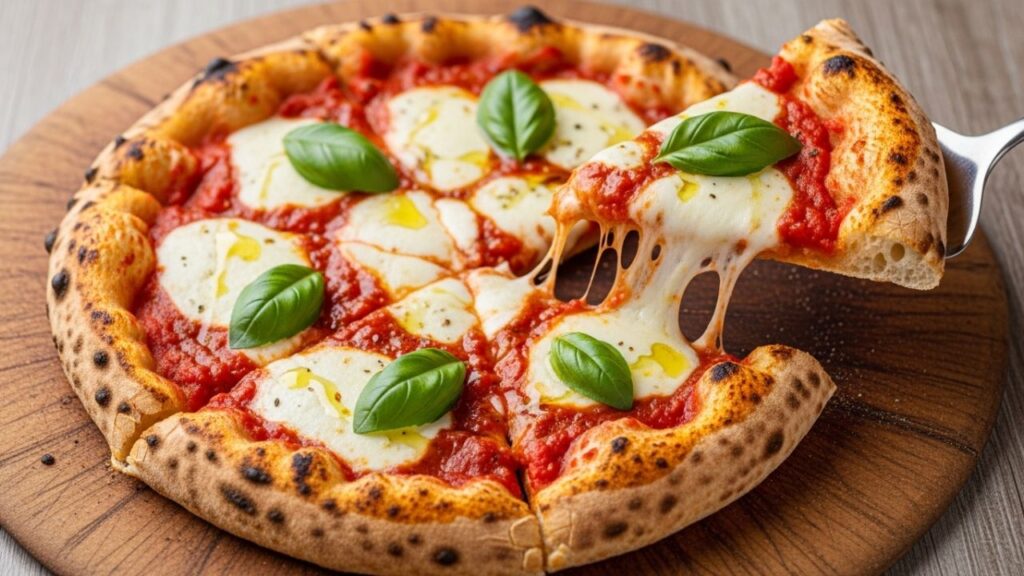
If you’ve been hunting for a gluten free pizza crust recipe that actually delivers the snap of a crisp edge and the pull of a chewy middle without tasting like sawdust, you just found it. I’ve spent years testing batches in my own kitchen because my best friend’s daughter was diagnosed with celiac and I refused to serve her sad, crumbly pizza. After more failed attempts than I care to admit (including one spectacularly burnt batch where I forgot the parchment paper), I landed on this version. It uses a smart blend of flours, a quick yeast proof, and a par-bake trick that gives you real pizzeria texture at home.
This gluten free pizza crust recipe comes together in about an hour and fifteen minutes start to finish, and it holds up to heavy toppings without turning into a soggy mess. The first time I pulled it out of the oven golden and blistered, my whole family went quiet for a second—then reached for seconds. You’re going to love how it feels like real pizza dough in your hands, not a fragile cookie. Let’s get you cooking.
What Makes This Gluten Free Pizza Crust Recipe Special
The magic is in the balance. Most store-bought gluten-free crusts either crumble when you slice them or stay doughy in the center. This one avoids both problems because we combine a good 1:1 gluten-free flour blend with a touch of almond flour for tenderness and a little xanthan gum insurance for stretch. The yeast gives it that classic fermented aroma and airy pockets you expect from Italian-style pizza dough, while the par-bake step sets the structure before the toppings ever touch it.



I learned the hard way that skipping the par-bake is the fastest route to disappointment. The crust needs those first ten minutes alone in a screaming-hot oven to crisp the bottom and create a moisture barrier. Once you master that, every bite has contrast: the edges go shatter-crisp, the center stays pleasantly chewy, and the whole thing lifts cleanly off the pan.
It’s also incredibly forgiving once you get the feel for the dough. Gluten-free dough behaves differently—no long knead, no windowpane test—but it still rewards patience. I’ve made this on weeknights when I’m tired and on weekends when I have friends over, and it never lets me down. The flavor is neutral enough to let your sauce and cheese shine, yet it has just enough character from the olive oil and optional herbs that you don’t need to over-season the toppings.
Have you ever pulled a gluten-free pizza out of the oven only to watch it fall apart the second you slice it? This recipe fixes that. Drop a comment below if you’ve had a similar kitchen disaster—I’ve probably lived it too.
Gluten Free Pizza Crust Recipe Ingredients You Will Need
Here’s exactly what you’ll need for one generous 12- to 14-inch crust (or two smaller 10-inch pies). I always weigh the flours because gluten-free baking is less forgiving of volume measurements than traditional dough.
| Ingredient | Quantity | Notes or Substitutes |
|---|---|---|
| Gluten-free 1:1 flour blend | 2 cups (250 g) | Must contain xanthan gum already (King Arthur Measure for Measure or Bob’s Red Mill 1-to-1 are my favorites) |
| Almond flour (fine grind) | ¼ cup (25 g) | Adds moisture and subtle nuttiness; swap with more GF blend for nut-free |
| Instant yeast | 1 teaspoon | Not active dry—use instant for faster rise |
| Fine sea salt | 1 teaspoon | Table salt works but use ¾ tsp |
| Sugar or honey | 1 teaspoon | Feeds the yeast; honey adds a tiny bit of flavor |
| Extra-virgin olive oil | 2 tablespoons | Use a good one—the flavor comes through |
| Warm water (105–110 °F) | ¾ cup (180 ml) | Too hot kills yeast, too cool slows everything down |
| Large egg (room temperature) | 1 | Binds and tenderizes; see vegan note below |
| Dried oregano (optional) | ½ teaspoon | Gives a classic Italian pizza-dough aroma |
Gluten Free Pizza Crust Recipe Quick Facts
- Prep time: 20 minutes active + 45 minutes rise
- Cook time: 18–22 minutes
- Total time: About 1 hour 25 minutes
- Servings: 1 large pizza (8 slices) or 2 smaller pizzas
- Difficulty: Moderate (mostly patience)
- Calories per slice (crust only): Approximately 180
Gluten Free Pizza Crust Recipe Step-by-Step Instructions
Start by blooming the yeast so you know it’s alive before you waste ingredients. In a small bowl whisk together the warm water, sugar (or honey), and instant yeast. Let it sit for 5 to 10 minutes until it looks foamy and smells bready. If nothing happens, your yeast is dead—grab a fresh packet.
While the yeast wakes up, whisk the gluten-free flour blend, almond flour, salt, and oregano (if using) in a large mixing bowl. The almond flour keeps the crust from drying out, which is a common complaint with straight rice-flour blends.
Pour the foamy yeast mixture, olive oil, and lightly beaten egg into the dry ingredients. Stir with a sturdy wooden spoon or the paddle attachment on a stand mixer until no dry pockets remain. The dough will look shaggy and feel sticky—that’s normal. Gluten-free dough doesn’t develop gluten strands, so you’re just bringing it together, not kneading like wheat dough.
Lightly flour your counter with more gluten-free blend and turn the dough out. Use oiled hands to gently fold it over itself a few times for about 60 seconds. It should feel soft and slightly springy. Shape into a ball, place back in the bowl, cover with a damp towel, and let it rise in a warm spot for 40 to 60 minutes. It won’t double in size like wheat dough, but it will puff noticeably and feel lighter.
Preheat your oven to 425 °F (220 °C) with a pizza stone or inverted baking sheet on the middle rack. The stone gives the best crisp bottom; a pan works fine too.
Cut a sheet of parchment paper the size of your pan. Place the risen dough in the center, oil your hands again, and gently press it out into a 12- to 14-inch circle about ¼ inch thick in the middle and slightly thicker at the edges for that classic rim. Dock the center a few times with a fork so it doesn’t balloon.
Slide the parchment and crust onto the hot stone or pan and par-bake for 8 to 10 minutes until the surface looks set and the edges are just starting to turn pale gold. This step is non-negotiable for structure.
Pull it out, add your sauce, cheese, and toppings (don’t overload the center), then return to the oven for another 10 to 12 minutes until the cheese is bubbly and the crust is deep golden with those beautiful leopard spots. Let it rest on a cutting board for 3 minutes before slicing—the juices settle and the crust firms up.
Pro Tips and Common Mistakes to Avoid
The biggest mistake I see is treating gluten-free dough exactly like wheat dough. You can’t stretch it aggressively or it tears. Pat it gently with oiled hands instead.
Another rookie error is skipping the par-bake or using cold ingredients straight from the fridge. Room-temperature egg and water help the dough rise evenly and prevent a dense center.
Watch the oven closely during the final bake—gluten-free crusts can go from perfect to dry in a minute. If your oven runs hot, drop the temperature to 400 °F after the par-bake.
Always use parchment under the dough. Without it, the crust sticks and you lose the crisp bottom you worked so hard for.
One last pro move: brush the par-baked edges with a little olive oil and a pinch of flaky salt right before adding toppings. It creates an irresistible golden rim that makes people ask for your secret.
Variations and Substitutions
Want a vegan gluten free pizza crust recipe? Replace the egg with a flax egg (1 tablespoon ground flax + 3 tablespoons water, rested 10 minutes). It works beautifully and keeps the chew.
For a thinner, cracker-style crust, divide the dough in half and roll it out to ⅛ inch thick. It bakes faster—watch it at the 6-minute mark during par-bake.
If you want a thicker Sicilian-style pan pizza, press the full dough into an oiled 9×13-inch pan and let it rise 15 minutes longer before par-baking. The almond flour keeps it tender even at that thickness.
Herb lovers can knead in 1 teaspoon of Italian seasoning plus a little garlic powder right after the initial mix. For a spicy kick, add ¼ teaspoon red pepper flakes to the dry ingredients.
Nut-free version? Swap the almond flour for an extra ¼ cup of the gluten-free blend and add 1 teaspoon of psyllium husk powder instead. The texture stays remarkably close.
What variation are you most excited to try? Let me know in the comments—I’m always stealing good ideas from readers.
How to Store, Reheat, and Serve
The unbaked dough ball keeps in the fridge up to 48 hours in an oiled zip-top bag. Let it come to room temperature for 30 minutes before shaping so it’s easier to work with.
You can also freeze the dough: portion it, wrap tightly in plastic, then foil, and freeze up to three months. Thaw overnight in the fridge and proceed as usual.
Once baked and topped, leftovers keep in the fridge for three days. The crust stays crisp if you store slices on a paper towel inside a loosely covered container.
To reheat, never use the microwave—it turns the crust rubbery. Place slices directly on a preheated 375 °F oven rack or pizza stone for 5 to 7 minutes. The bottom crisps back up and the cheese melts perfectly.
Serving ideas: Keep it classic with marinara, fresh mozzarella, and basil. Or go fully loaded with roasted vegetables, spicy sausage, and a drizzle of hot honey after baking. A simple arugula salad on the side cuts through the richness.
What is your go-to side dish for pizza night? I would love to hear what you pair it with—drop it in the comments.
Gluten Free Pizza Crust Recipe FAQ
Q : Can I make this gluten free pizza crust recipe ahead of time?
Ans – Yes. Prepare the dough through the rising step, then refrigerate it up to two days. Bring it to room temperature before shaping and par-baking. You can also freeze the shaped, par-baked crust (without toppings) for up to one month—wrap it well and reheat straight from frozen.
Q : Is this gluten free pizza crust recipe vegan?
Ans – It can be. Swap the egg for a flax egg and use sugar instead of honey. The texture stays nearly identical, though the crust is very slightly less tender. I’ve tested both versions side by side and both disappear equally fast.
Q : What is the best gluten-free flour blend for pizza crust?
Ans – A 1:1 blend that already contains xanthan gum is essential. King Arthur Measure for Measure and Bob’s Red Mill 1-to-1 both give reliable results. Avoid single-flour options like just rice flour—they turn out gritty or overly dry.
Q : Why does my gluten free pizza crust crumble?
Ans – Usually it’s because the dough was overworked, the par-bake was skipped, or the flour blend lacked enough binding. Make sure your blend has xanthan gum and pat—don’t stretch—the dough. Resting after shaping also helps it hold together.
Q : Can I freeze the baked gluten free pizza crust?
Ans – Absolutely. Par-bake it, cool completely, then wrap tightly and freeze. When you’re ready, add toppings and bake from frozen at 425 °F for 12 to 15 minutes. It’s a lifesaver for busy weeknights.
Q : How do I get a crispier bottom on my gluten free pizza crust recipe?
Ans – Use a pizza stone or steel preheated for a full 45 minutes. The intense bottom heat creates steam that lifts and crisps the crust beautifully. A dark-colored metal pan also helps more than a light one.
There you have it—the gluten free pizza crust recipe I wish I’d had years ago. Make it once and I promise you’ll have it memorized. Your kitchen is about to smell like the best Italian pizzeria in town, and no one at the table will guess it’s gluten-free. Now go preheat that oven and enjoy every single chewy, crispy bite.