FSD Tesla : Tesla’s Full Self-Driving system—often shortened to FSD Tesla—is one of the most talked-about technologies in the auto and tech world. Supporters call it the future of driving. Critics say it’s misunderstood and sometimes oversold. The truth sits somewhere in between, and that’s exactly what this article explains.
Within the first few minutes of owning a Tesla, many drivers ask the same questions: Is FSD really self-driving? Can I stop paying attention? Is it worth the money? To answer those honestly, we need to go beyond marketing claims and look at how FSD Tesla actually works, what real owners experience on public roads, and where the technology is realistically going in the next few years.
This guide is written from an industry perspective—focused on real-world use, regulatory limits, and technical design—so you can clearly understand what FSD Tesla is today, not what it’s promised to become someday.
 Toyota Tundra 2026: Powerful Full-Size Pickup Truck with Advanced Towing, Off-Road Capability & Premium Features
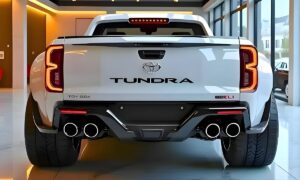 Toyota Tundra 2026 Reveal – Bold New Design and Powerful Performance
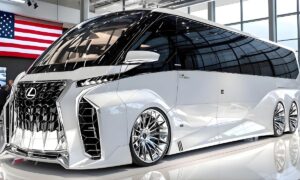 2026 Lexus LM 350h Concept Showcases Japan’s Most Premium Chauffeur-Focused MPV Design
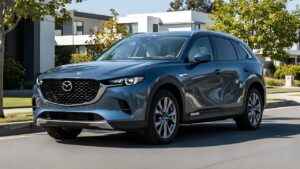 Mazda CX-90 Review 2026: A Practical Three-Row SUV for Daily Life
What Is FSD Tesla and How Is It Different From Autopilot?
One of the biggest sources of confusion around FSD Tesla is the difference between Autopilot, Enhanced Autopilot, and Full Self-Driving Capability. These are not the same thing.
Every new Tesla comes with basic Autopilot, which includes traffic-aware cruise control and lane keeping on highways. This is comparable to advanced driver assistance systems from other brands like Ford BlueCruise or GM Super Cruise, though Tesla relies purely on cameras rather than lidar or radar.
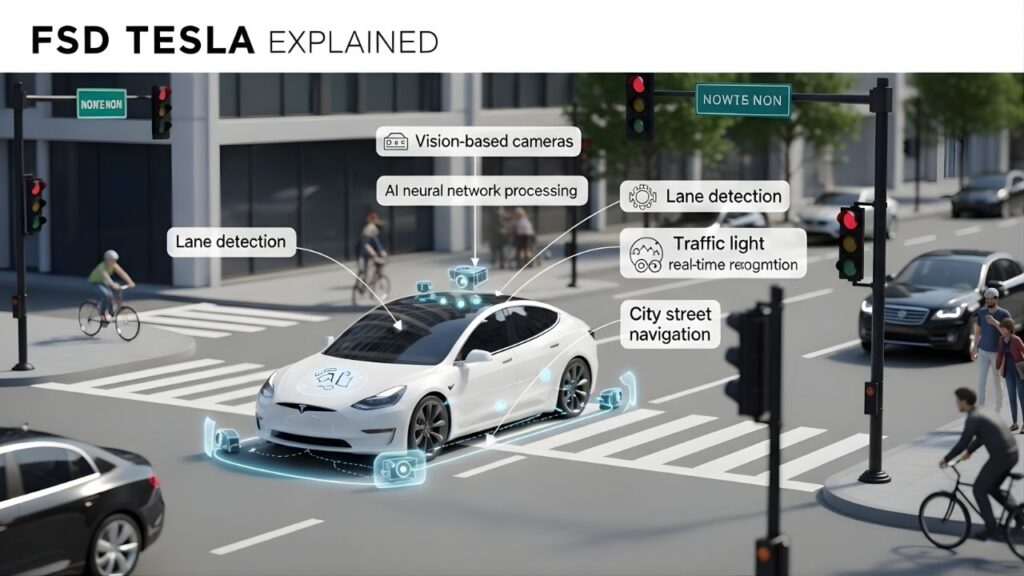
FSD Tesla, on the other hand, is a software package designed to handle city streets, intersections, traffic lights, roundabouts, and turns—situations where driving decisions are far more complex. With FSD enabled, the car can:
- Navigate from point A to point B using navigation
- Make turns at intersections
- Respond to traffic lights and stop signs
- Change lanes automatically
- Park itself in some situations
Despite the name, FSD Tesla is not autonomous driving. The driver must remain alert, keep hands ready, and take control instantly if the system makes a mistake. Tesla itself classifies FSD as a Level 2 driver assistance system, meaning human supervision is always required.
This distinction matters—not just legally, but practically—because misuse often comes from misunderstanding what the system is designed to do.
Toyota Tundra 2026: Powerful Full-Size Pickup Truck with Advanced Towing, Off-Road Capability & Premium Features
Toyota Tundra 2026 Reveal – Bold New Design and Powerful Performance
2026 Lexus LM 350h Concept Showcases Japan’s Most Premium Chauffeur-Focused MPV Design
Mazda CX-90 Review 2026: A Practical Three-Row SUV for Daily Life
How FSD Tesla Actually Works Behind the Scenes
At the core of FSD Tesla is a vision-only approach. Tesla removed radar and ultrasonic sensors in favor of cameras paired with neural networks trained on massive amounts of real-world driving data.
Every Tesla on the road acts like a rolling data collector. When drivers encounter unusual situations—confusing lane markings, construction zones, aggressive merging traffic—that data is anonymized and sent back to Tesla. Engineers then use it to train and refine the FSD system.
Unlike rule-based systems that rely heavily on pre-mapped roads, FSD Tesla learns patterns. It doesn’t just follow instructions; it predicts what other drivers, cyclists, and pedestrians are likely to do next.
This approach has advantages:
- It scales globally without needing detailed maps for every city
- It improves continuously through over-the-air updates
- It handles edge cases better over time
But it also has weaknesses. Vision systems can struggle with heavy rain, glare, fog, or unusual lighting. Humans adapt instinctively to these conditions; software still needs more training data to do so reliably.
Real-World Performance of FSD Tesla on City Streets
On a clear day with well-marked roads, FSD Tesla can feel impressive. The car smoothly accelerates, slows for traffic, makes turns, and navigates complex intersections that would have seemed impossible for software a decade ago.
However, daily driving isn’t a controlled demo.
In real use, drivers report that FSD Tesla can:
- Hesitate at unprotected left turns
- Brake too aggressively in some situations
- Misjudge fast-moving cross traffic
- Struggle with temporary construction layouts
This doesn’t make the system useless—but it does mean the driver must stay mentally engaged at all times. Experienced users often describe FSD as a highly capable learner driver, not an expert chauffeur.
One important point many articles miss: FSD Tesla works best when drivers understand how it thinks. Predictable inputs, clear road markings, and patient supervision lead to smoother performance. Treating it like a fully autonomous robot usually ends in frustration.
Is FSD Tesla Worth the Cost? A Practical Ownership Perspective
As of now, FSD Tesla is offered either as a high one-time purchase or a monthly subscription, depending on region. The cost is significant—often equal to the price of a small used car.
So, is it worth it?
That depends on how you drive and what you value.
For drivers who:
- Spend hours daily in city traffic
- Enjoy testing cutting-edge technology
- Plan to keep their Tesla long-term
- Appreciate frequent software updates
FSD Tesla can feel like a living product that improves over time. Each update may reduce interventions, smooth out behavior, or add new capabilities.
For drivers who:
- Mostly drive highways
- Expect hands-off autonomy
- Want guaranteed reliability today
Basic Autopilot or Enhanced Autopilot may already cover most needs at a much lower cost.
From an investment standpoint, it’s important to understand that FSD is software tied to the car, not the driver, in many regions. Selling the vehicle may or may not recover the full cost, depending on resale market conditions.
Safety, Regulation, and Why FSD Tesla Is Closely Watched
FSD Tesla exists under intense scrutiny from regulators, safety organizations, and the media. Any crash involving a Tesla using driver assistance often becomes headline news, even when similar incidents with other brands receive less attention.
Regulators focus on two key issues:
- Driver behavior — Are people over-trusting the system?
- System limits — Does the software clearly communicate when it needs human help?
Tesla has gradually increased driver monitoring requirements, including cabin camera checks and steering wheel engagement, to reduce misuse. These changes sometimes frustrate users but are necessary to keep the system legal and safe.
From an industry standpoint, FSD Tesla is shaping future regulations. Governments are learning how to classify AI-driven vehicles in real time, using Tesla as a case study—whether Tesla wants that role or not.
The Future of FSD Tesla: What’s Realistic and What’s Not
The biggest misconception about FSD Tesla is the timeline to full autonomy.
Fully driverless cars—where you can sleep, read, or sit without a steering wheel—require Level 4 or Level 5 autonomy. That involves not just better software, but new laws, infrastructure changes, and standardized safety validation.
In the near future, what’s more realistic is:
- Fewer driver interventions per mile
- Smoother city driving behavior
- Better handling of edge cases
- Expanded availability across regions
Tesla’s advantage lies in scale. Millions of vehicles continuously feeding real-world data gives FSD Tesla a learning engine few competitors can match. But scale alone doesn’t eliminate the final complexity of human judgment, ethics, and unpredictable environments.
Experts increasingly agree that autonomy will arrive gradually, not overnight—and FSD Tesla is one of the most visible steps along that path.
Final Thoughts: Understanding FSD Tesla Without the Hype
FSD Tesla is neither a gimmick nor a finished product. It’s an evolving driver assistance system that shows how far AI-powered vehicles have come—and how far they still need to go.
If you approach FSD with the right expectations, it can reduce driving fatigue, handle routine tasks, and offer a glimpse into the future of transportation. If you expect a fully autonomous car today, you’ll likely be disappointed.
The smartest way to view FSD Tesla is as a long-term software platform, not a magic switch. It rewards informed users who stay engaged, understand its limits, and value steady improvement over instant perfection.
That balance—between ambition and responsibility—is what will ultimately decide how FSD Tesla is remembered in automotive history.