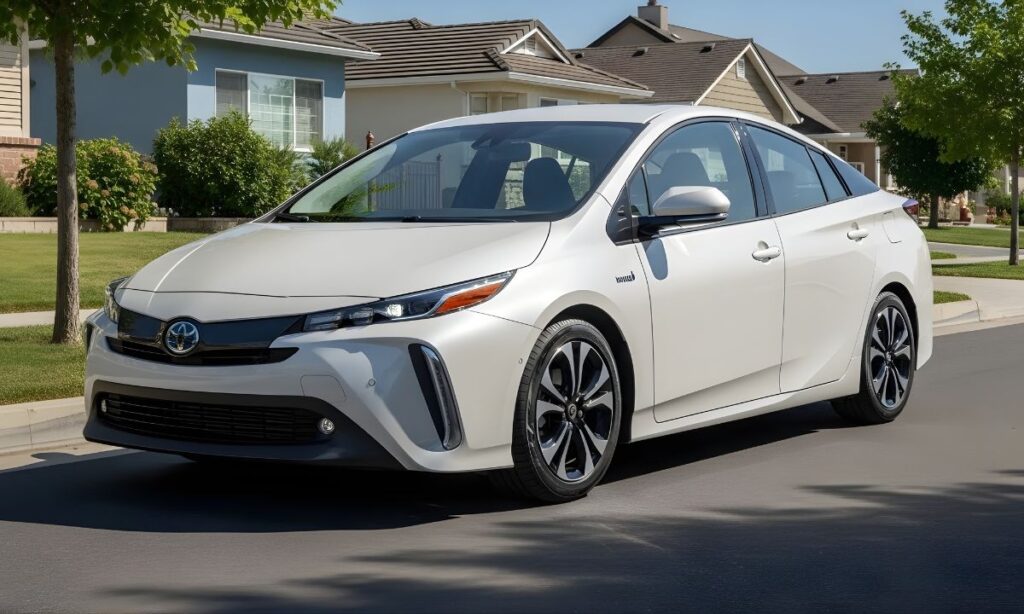
Toyota Prius 2026: The 2026 Toyota Prius remains one of the most recognizable hybrid cars in the United States. Known for strong fuel economy and reliability, the Prius continues Toyota’s long tradition of hybrid-focused vehicles. For 2026, the model returns with minimal changes, offering a refined exterior, practical interior, and efficient hybrid powertrain that suits commuters, small families, and eco-minded drivers.
Design: Sleek and Functional
The 2026 Prius features a sleek hatchback design that stands out from typical compact cars. Its sharply sloped windshield and smooth body lines help reduce wind resistance, improving fuel efficiency. LED headlights and taillights are available on most trims, giving the car a modern look without flashy styling.
The profile of the Prius is aerodynamic and purposeful rather than bold or aggressive. Alloy wheel sizes vary by trim, with larger wheels on higher trims giving a slightly more dynamic stance. While not as tall as crossover SUVs, its low stance helps with a lower center of gravity for better handling.
Interior: Practical and Comfortable
Inside, the Prius offers space for five passengers with comfortable seating for everyday use. Front legroom and headroom are reasonable for adults, though taller passengers may notice a slightly lower roofline compared to larger vehicles.
The hatchback rear opens to a cargo area that can carry groceries, luggage, or daily gear. Rear seats feature a 60/40 split-fold layout, allowing flexibility between passengers and cargo.
Technology in the cabin is straightforward and user-friendly. Most models include an 8-inch touchscreen infotainment system, while higher trims feature a larger 12.3-inch touchscreen and premium audio system. Wireless Apple CarPlay, Android Auto, and multiple USB ports help keep drivers and passengers connected
While the design focuses on function, some drivers may find that interior materials feel simple compared to luxury-oriented rivals. However, the overall space and layout support comfortable daily use.
Engine: Hybrid Powertrain
The 2026 Prius runs on a 2.0-liter 4-cylinder hybrid engine paired with an electric motor and a continuously variable transmission (CVT). This hybrid setup balances fuel efficiency with everyday power needs, producing around 194 horsepower in front-wheel-drive models and 196 hp when equipped with available all-wheel drive.
Front-wheel drive comes standard, with electronic on-demand all-wheel drive (AWD) available for better traction in wet or slippery conditions — a useful option for drivers in colder climates.
The hybrid powertrain encourages smooth acceleration in city traffic and reliable response on highways. It’s not a sports car, but it fulfills the everyday driving needs of commuters and small families without stress.
Mileage: Hybrid Efficiency
Fuel economy is one of the Prius’s strongest points. According to EPA estimates, the 2026 Prius can achieve around:
- Up to 57 mpg combined
- 57 mpg city / 56 mpg highway (approximate figures)
These ratings make the Prius one of the most efficient non-plug-in hybrids available in the U.S., helping drivers spend less on fuel and more time between fill-ups. The actual mileage you get may differ based on driving habits, weather, and road conditions, but real-world estimates closely align with these numbers.
Features: Useful Technology for Daily Life
The 2026 Prius comes with a solid set of technology and convenience features tailored for daily driving:
- Wireless Apple CarPlay and Android Auto
- Bluetooth and USB connectivity
- Available wireless phone charging
- Standard Toyota Safety Sense 3.0 suite
- Available panoramic glass roof on higher trims
Safety-focused tech includes adaptive cruise control, lane-centering assist, automatic high beams, and road sign recognition. Blind-spot monitoring with rear cross-traffic alert helps in parking lots and busy roads. Higher trims add parking sensors and a hands-free power liftgate.
The infotainment and driver information displays are clear and easy to read, though some drivers prefer simpler layouts without overly complex menus. The focus remains on functionality rather than luxury
Safety: Confidence on the Road
Safety is a priority for the Prius. It has earned Top Safety Pick+ ratings from the Insurance Institute for Highway Safety (IIHS) and a 5-star overall rating from the National Highway Traffic Safety Administration (NHTSA) in recent model years, reflecting strong crash-protection performance.
Standard safety features are part of Toyota Safety Sense 3.0, which includes:
- Forward collision warning with automatic emergency braking
- Pedestrian, cyclist, and motorcyclist detection
- Lane departure alert and lane-keeping assistance
- Adaptive cruise control
These systems help drivers stay aware and respond to potential hazards on busy roads or highway commutes. Optional features on higher trims include a 360-degree camera system and parking assist, which can ease low-speed maneuvering.
Ride Quality: Steady and Comfortable
On the road, the Prius delivers a smooth and comfortable ride that suits daily commute routes and highway driving. Its suspension absorbs most bumps well, and the vehicle feels stable at common driving speeds.
The steering is light and predictable, making tight turns and parking simple for new drivers. It doesn’t provide sporty handling, but the Prius isn’t designed for that — its priority is comfort and efficiency.
Some drivers note that visibility out the rear window can feel narrow due to the hatchback’s shape, especially when backing up. Higher trims with digital mirrors and camera aids help reduce this concern
Price: What to Expect
Pricing for the 2026 Prius starts competitively within the compact hybrid market:
- Prius LE: around $29,745
- Prius XLE: around $33,190
- Prius Nightshade: around $33,995
- Prius Limited: around $36,760
All-wheel drive is an additional option that generally adds around $1,400 to the price.
Compared to similar hybrids like the Honda Civic Hybrid and Hyundai Elantra Hybrid, the Prius sits in a middle price range with a strong reputation for resale value and efficiency.
Rivals: Who It Competes With
The 2026 Prius competes with several other efficient compact cars and hybrids, including:
- Honda Civic Hybrid – A fuel-efficient alternative with reliable performance
- Toyota Corolla Hybrid – Toyota’s smaller, more affordable hybrid option
- Hyundai Elantra Hybrid – Known for value and features
Each rival offers its strengths — some have sportier rides, while others focus on tech features or price value. Buyers should weigh priorities like fuel economy, comfort, and budget when choosing
Who Should Consider the 2026 Prius?
The Toyota Prius is a solid choice for:
- Daily commuters looking for top-tier fuel efficiency
- Eco-minded buyers who want lower emissions without full electric range anxiety
- Small families or solo drivers needing reliable and cost-effective transportation
It may be less ideal for buyers who want large cargo space or who prefer the higher seating and visibility of crossover SUVs. Tall passengers should test-drive the Prius to ensure headroom and visibility meet their needs.
Final Verdict
The 2026 Toyota Prius remains a practical and efficient choice in the hybrid car market. Its strong fuel economy, reliable safety technology, and user-friendly features make it well-suited for everyday driving. While it doesn’t offer luxury finishes or athletic performance, it does deliver exactly what many buyers want: low running costs, useful technology, and a comfortable ride for daily commutes and errands. Whether you’re reducing fuel costs or choosing your first hybrid, the Prius stands as a dependable option in 2026.