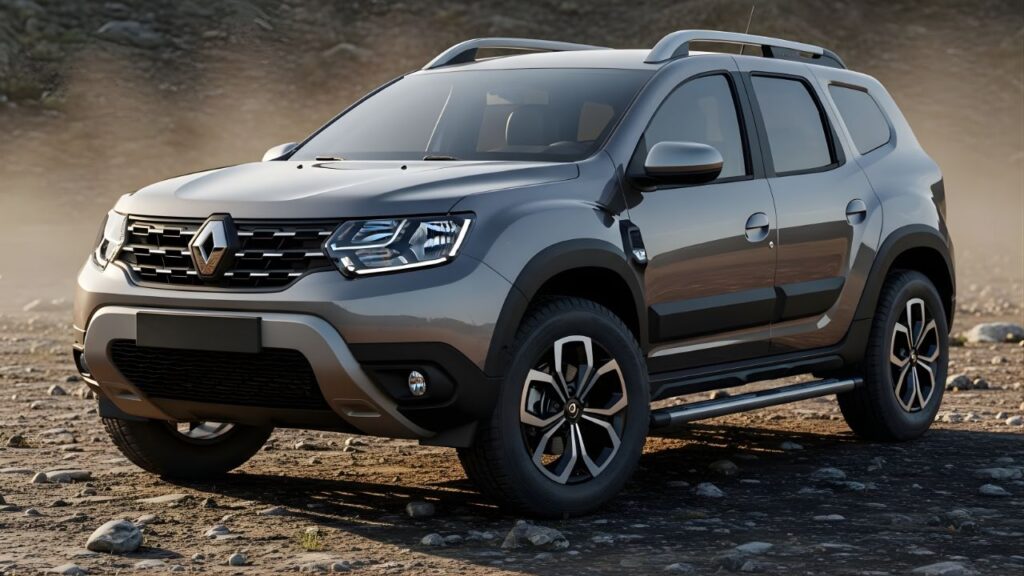
Renault Duster 2026 : For nearly a decade, the Renault Duster held a strange but powerful position in the SUV world. It was never the most refined, never the most tech-heavy, and rarely the most stylish. Yet it earned something far more valuable: trust. In emerging and mature markets alike, the Duster became shorthand for durability, honest engineering, and go-anywhere confidence without luxury pricing.
The Renault Duster 2026 is not a nostalgic reboot. It is a strategic reset. Built for stricter emissions rules, more demanding buyers, and a market flooded with polished crossovers, the new Duster must evolve without losing its rugged DNA. Renault knows this. That awareness shapes every decision behind the 2026 model.
What follows is not speculation dressed as hype, but a grounded, experience-driven analysis of where the Duster is heading, why it matters, and what buyers should realistically expect.
 Toyota Tundra 2026: Powerful Full-Size Pickup Truck with Advanced Towing, Off-Road Capability & Premium Features
 Toyota Tundra 2026 Reveal – Bold New Design and Powerful Performance
 2026 Lexus LM 350h Concept Showcases Japan’s Most Premium Chauffeur-Focused MPV Design
 Mazda CX-90 Review 2026: A Practical Three-Row SUV for Daily Life
A Strategic Shift, Not Just a New Generation
Renault’s biggest challenge with the Duster was not competition; it was perception. The outgoing model was seen as capable but dated. In 2026, Renault corrects that by repositioning the Duster as a global compact SUV with genuine off-road credibility, not a budget alternative pretending to be premium.
Platform evolution and what it really means
The 2026 Duster transitions to Renault’s CMF-B architecture, the same modular platform underpinning several successful Renault and Dacia vehicles worldwide. This matters for three reasons that most reviews overlook.
First, CMF-B allows weight reduction without sacrificing torsional rigidity. In practical terms, that improves fuel efficiency and ride comfort simultaneously—something older Dusters struggled to balance.
Second, this platform is future-proofed for electrification. Even if you never plan to buy a hybrid, this architecture ensures compliance with upcoming emission regulations, protecting resale value.
Third, manufacturing consistency improves panel gaps, NVH control, and long-term reliability. This is not glamorous, but it directly addresses one of the Duster’s quiet weaknesses: aging refinement.
Toyota Tundra 2026: Powerful Full-Size Pickup Truck with Advanced Towing, Off-Road Capability & Premium Features
Toyota Tundra 2026 Reveal – Bold New Design and Powerful Performance
2026 Lexus LM 350h Concept Showcases Japan’s Most Premium Chauffeur-Focused MPV Design
Mazda CX-90 Review 2026: A Practical Three-Row SUV for Daily Life
Why Renault didn’t abandon the Duster name
Renault could have retired the Duster badge and launched a completely new SUV. They didn’t, because the Duster name still carries credibility in rural, semi-urban, and adventure-focused buyer segments. The 2026 model builds on that trust rather than resetting it.
Exterior Design That Finally Matches Its Capability
The 2026 Duster looks the way owners always imagined it should.
It is boxier, more upright, and intentionally less coupe-like than many rivals. This is a conscious rejection of form-over-function design trends.
Design language inspired by function
Short overhangs, squared wheel arches, and a higher bonnet line give the Duster a planted stance. Unlike soft-roaders, this design isn’t pretending. Ground clearance remains a core priority, not a brochure statistic.
Renault’s new lighting signature integrates Y-shaped LED DRLs and slimmer headlamps, but avoids excessive chrome or fragile detailing. This SUV is designed to age well, both visually and physically.
Aerodynamics without compromising toughness
While the Duster looks rugged, subtle aerodynamic tweaks reduce drag compared to the previous generation. Flush underbody panels and optimized roof rails improve highway efficiency without harming off-road usability.
This balance is rare in the compact SUV segment, where design often prioritizes urban appeal at the expense of real-world versatility.
Interior Comfort Meets Practical Intelligence
The interior is where the 2026 Duster makes its most meaningful leap.
Previous Dusters were durable but utilitarian. The new model aims for functional comfort, not unnecessary luxury.
Cabin layout focused on usability
The dashboard adopts a horizontal layout that improves visibility and creates a sense of space. Controls are deliberately tactile, with physical buttons retained for climate and drive modes. Renault understands that touchscreen-only interfaces frustrate users in real driving conditions.
Seat ergonomics are improved with longer cushions and better lumbar support. This matters more than flashy upholstery when you spend hours on highways or broken rural roads.
Materials that prioritize longevity
Instead of soft-touch plastics everywhere, Renault uses scratch-resistant surfaces in high-contact areas. This may not impress in a showroom, but it pays off after years of use.
Storage solutions are smarter too. Larger door bins, deeper center console compartments, and a practical boot layout reflect feedback from long-term Duster owners.
Rear-seat experience no longer an afterthought
Rear legroom improves slightly thanks to platform optimization, but the real upgrade is seat comfort and suspension tuning. Passengers feel fewer sharp impacts, especially on uneven surfaces.
Powertrains Built for the Next Decade
The Renault Duster 2026 lineup reflects a clear understanding of global market needs rather than chasing trends blindly.
Petrol engines with smarter efficiency
Expect updated turbo-petrol engines tuned for lower emissions and smoother power delivery. These engines focus on mid-range torque rather than peak output, aligning with how most Dusters are actually driven.
For everyday users, this translates to easier overtakes, less gear hunting, and calmer city driving.
Hybrid technology without complexity
Renault’s mild-hybrid and strong-hybrid options are designed to reduce fuel consumption without introducing reliability anxiety. Unlike plug-in systems that demand charging infrastructure, these hybrids work silently in the background.
Fuel savings are most noticeable in stop-and-go traffic, where electric assistance reduces engine strain and improves refinement.
Diesel’s uncertain but realistic future
In select markets, diesel may continue due to demand for torque and efficiency. However, Renault is cautious. Emissions compliance costs make diesel a strategic, not default, option.
All-wheel drive still matters here
Unlike many crossovers that drop AWD entirely, the Duster retains an intelligent all-wheel-drive option. This keeps the Duster relevant for buyers who actually venture beyond paved roads.
Ride Quality, Handling, and Off-Road Reality
This is where the Duster quietly outperforms expectations.
Suspension tuned for real roads
The suspension setup balances comfort and durability. Renault avoids over-stiff tuning, which plagues many modern SUVs chasing “sporty” impressions.
On broken roads, the Duster remains composed rather than nervous. That is intentional.
Off-road capability without gimmicks
Selectable terrain modes, hill descent control, and mechanical grip do the heavy lifting. Renault does not oversell electronic tricks. Instead, it relies on ground clearance, approach angles, and drivetrain integrity.
This honesty sets the Duster apart in a segment crowded with cosmetic SUVs.
Technology That Serves, Not Distracts
Technology in the 2026 Duster is practical, not performative.
Infotainment designed for daily use
The infotainment system supports wireless smartphone integration, fast boot-up times, and clear navigation graphics. Screen size is adequate without dominating the cabin.
Voice commands are improved, but Renault wisely avoids making them mandatory for basic functions.
Safety features with real-world relevance
Advanced driver assistance systems include adaptive cruise control, lane-keeping assist, blind-spot monitoring, and emergency braking. These features are calibrated conservatively to avoid false alerts.
Structural safety benefits from improved crash architecture under the CMF-B platform, increasing occupant protection without significant weight gain.
Pricing Strategy and Competitive Positioning
The Renault Duster 2026 is not trying to undercut every rival. Instead, it positions itself as value-focused capability.
Expected pricing logic
Pricing is expected to sit slightly above the outgoing model, justified by platform upgrades, safety features, and improved refinement. Renault avoids luxury pricing territory intentionally.
Key competitors and how the Duster differs
While rivals emphasize screens, ambient lighting, and urban styling, the Duster focuses on ownership experience over time. Lower maintenance costs, proven mechanicals, and off-road credibility remain its strengths.
This makes the Duster especially appealing to buyers who keep vehicles longer than average.
Ownership Experience and Long-Term Value
One of the most underreported aspects of the Duster story is ownership economics.
Maintenance philosophy
Renault continues to design the Duster with accessible service points and widely available components. This reduces downtime and long-term costs.
Resale and reliability outlook
The shift to a modern platform improves perceived quality, which directly impacts resale value. Combined with Renault’s global parts network, the 2026 Duster is positioned as a low-risk purchase.
Final Perspective: Why the Duster Still Matters
The Renault Duster 2026 succeeds not by chasing trends, but by refining its purpose. It grows up without selling out. In a market saturated with lookalike SUVs, that restraint becomes its biggest strength.
For buyers who want an SUV that works as hard in year five as it does on day one, the Duster remains one of the most honest options available. And in 2026, it finally looks and feels as capable as it has always been.