Summer Pasta Salad Recipes for Diabetes : Managing blood sugar does not have to mean saying no to pasta salad at every summer cookout. I know that feels like the default answer — pasta is carbs, carbs spike blood sugar, end of story. But the real story is more nuanced, and it means people with diabetes can absolutely enjoy a well-made summer pasta salad recipe without compromising their health goals.
The key is understanding how to build a pasta salad that moderates glycemic impact, increases fiber and protein content, and uses the right ingredients. This is not about making a sad, diet-tasting substitute. This is about making a genuinely delicious pasta salad that happens to be blood-sugar-friendly.
| Quick Facts | Details |
|---|---|
| Prep Time | 20 minutes |
| Cook Time | 10 minutes |
| Servings | 4–6 |
| Difficulty | Easy |
| Net Carbs | ~28g per serving (varies by recipe) |
Why Traditional Pasta Salad Can Be Problematic
Standard pasta salad recipes are often heavy on white pasta and light on protein, fiber, and healthy fats. White pasta on its own has a moderate glycemic index, but large portions without balancing nutrients can cause blood sugar spikes.

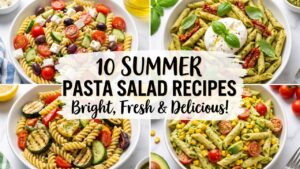

The good news is that cold pasta actually has a lower glycemic index than hot pasta. When pasta is cooked and then cooled, the starch structure changes — it becomes what is called resistant starch, which the body digests more slowly. This is not a magic fix, but it is a real physiological effect that makes cold pasta salad genuinely better for blood sugar management than the same amount of freshly cooked warm pasta.
According to the American Diabetes Association, building balanced meals with fiber, protein, and healthy fats alongside carbohydrates is the key strategy for managing blood glucose. These pasta salad recipes are built exactly on that principle.
Building a Diabetes-Friendly Pasta Salad: The Rules
Use smaller portions of pasta. A diabetes-friendly pasta salad uses pasta as one component among many, not as 80 percent of the bowl.
Add protein. Chickpeas, grilled chicken, tuna, hard-boiled eggs, or edamame all add protein that slows glucose absorption.
Load up the vegetables. Non-starchy vegetables like cucumber, bell pepper, tomatoes, broccoli, and spinach add bulk, fiber, and nutrients without significant carbohydrate load.
Choose whole grain pasta. Whole wheat rotini or chickpea pasta has more fiber and a lower glycemic impact than standard white pasta.
Use vinaigrette over creamy dressings. Most creamy pasta salad dressings are high in added sugar. A lemon-herb vinaigrette gives you bright flavor without hidden sugars.
5 Diabetes-Friendly Summer Pasta Salad Recipes
Recipe 1: Greek Chickpea Pasta Salad
Whole wheat penne, chickpeas, cucumber, cherry tomatoes, kalamata olives, and feta in a lemon-oregano dressing. The chickpeas double your protein and fiber content in one ingredient.
Recipe 2: Tuna and White Bean Pasta Salad
Whole grain rotini with oil-packed tuna, white beans, capers, celery, lemon, and fresh parsley. High in protein, moderate in carbs, and deeply satisfying.
Recipe 3: Grilled Chicken and Vegetable Pasta Salad
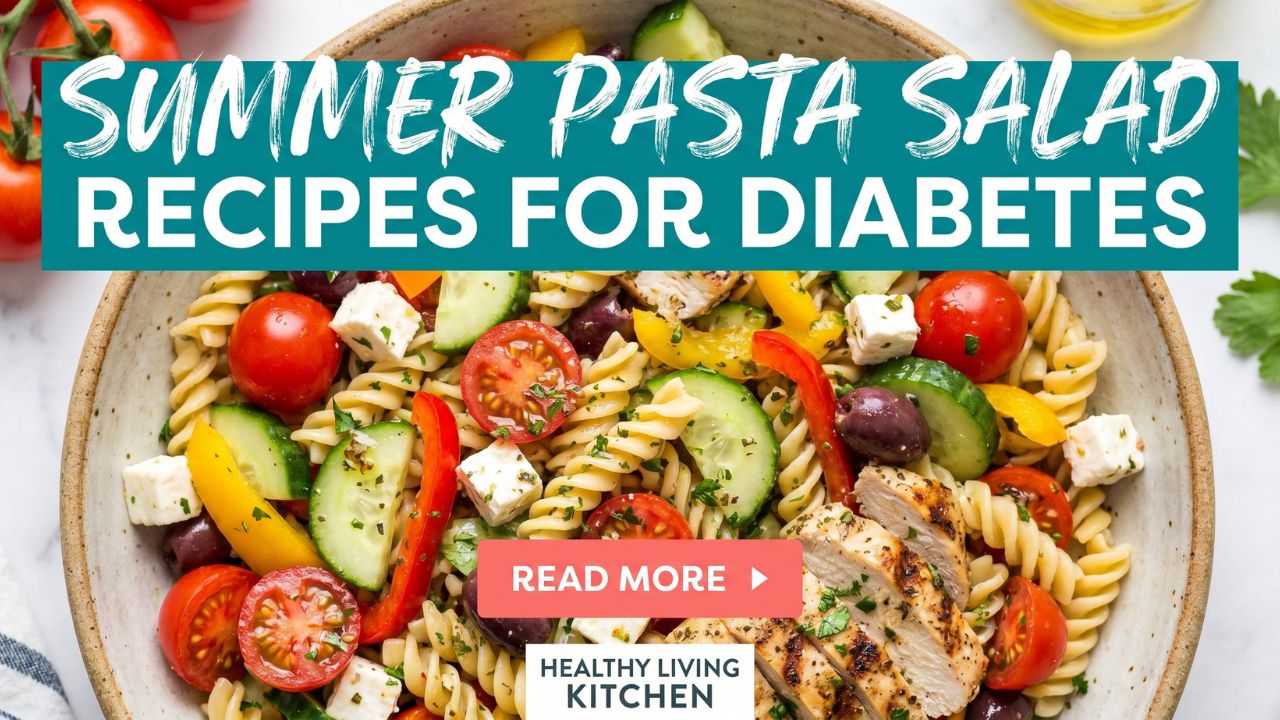
Chickpea pasta with grilled chicken, roasted zucchini, cherry tomatoes, and a fresh herb vinaigrette. The chickpea pasta provides significantly more protein per serving than standard pasta.
Recipe 4: Broccoli and Edamame Pasta Salad
Whole wheat farfalle with steamed broccoli florets, shelled edamame, red onion, and a sesame-ginger dressing. This is a powerhouse of fiber and plant-based protein.
Recipe 5: Mediterranean Lentil Pasta Salad
Ditalini with cooked green lentils, roasted red pepper, sun-dried tomatoes, spinach, and a red wine vinaigrette. Lentils have one of the lowest glycemic indexes of any food.
Summer Pasta Salad Recipes for Diabetes
| Ingredient | Quantity | Notes / Substitutes |
|---|---|---|
| Whole wheat or chickpea rotini | 8 oz | Chickpea pasta for highest protein |
| Chickpeas or white beans | 1 can (15 oz) | Lentils also work well |
| Non-starchy vegetables | 2–3 cups total | Cucumber, tomatoes, bell pepper, broccoli |
| Protein (chicken, tuna, eggs) | 4–6 oz per serving | Choose based on dietary preference |
| Olive oil | 3 tablespoons | Extra virgin for best flavor |
| Lemon juice or red wine vinegar | 2–3 tablespoons | Fresh is always better |
| Fresh herbs | ¼ cup | Parsley, dill, or basil |
| Feta or goat cheese | 2 oz | Optional; adds calcium and protein |
| Dijon mustard | 1 tsp | For dressing emulsification |
Pro Tips for Keeping Blood Sugar Stable
Portion size matters. Even a diabetes-friendly pasta salad can affect blood sugar in large quantities. A serving of about one to one and a half cups is a reasonable portion.
Pair with more vegetables. If pasta salad is your main dish, serve it alongside a large green salad. This lowers the overall glycemic load of the meal.
Chill the pasta before eating. The resistant starch benefit requires the pasta to be cold. This is one reason cold pasta salad is genuinely better than warm pasta for blood sugar management.
Watch the dressing. Many store-bought Italian and Caesar dressings contain significant added sugar. Make your own dressing with olive oil, lemon juice, vinegar, herbs, and Dijon mustard to control exactly what is in it.
How to Store, Reheat, and Serve
Store in airtight containers in the refrigerator for up to four days. The resistant starch content remains even after multiple days of refrigeration, making leftovers just as blood-sugar-friendly as the freshly made version.
Serve cold, directly from the refrigerator or at cool room temperature. Never reheat — this eliminates the resistant starch benefit and turns cold pasta salad into regular hot pasta.
Summer Pasta Salad Recipes for Diabetes FAQ
Q : What salad is good for Diabetes?
Ans – The best salads for people with diabetes are those built on a foundation of non-starchy vegetables with protein and healthy fats. For pasta salads specifically, using whole grain or legume-based pasta, adding a generous protein source (chickpeas, chicken, tuna), and loading up with vegetables creates a balanced meal that supports blood sugar stability.
Q : Is pasta salad okay for type 2 diabetes?
Ans – In moderate portions, a well-constructed pasta salad can fit into a diabetes-friendly eating plan. Cold pasta contains resistant starch, which digests more slowly than warm pasta. Using whole grain pasta, adding protein and fiber, and avoiding high-sugar dressings all help moderate glycemic impact.
Q : What pasta has the lowest glycemic index?
Ans – Legume-based pastas (chickpea, lentil, black bean) have the lowest glycemic index among pasta options. Whole wheat pasta is the next best choice. Among regular pasta shapes, smaller pasta cooks more evenly and may have a slightly more moderate glycemic impact than larger shapes.
Q : Can I eat pasta salad every day with diabetes?
Ans – With appropriate portion sizes and the right ingredient balance, there is no reason a person with diabetes cannot enjoy pasta salad regularly. Variety matters — rotating protein sources and vegetables keeps your nutritional intake balanced.